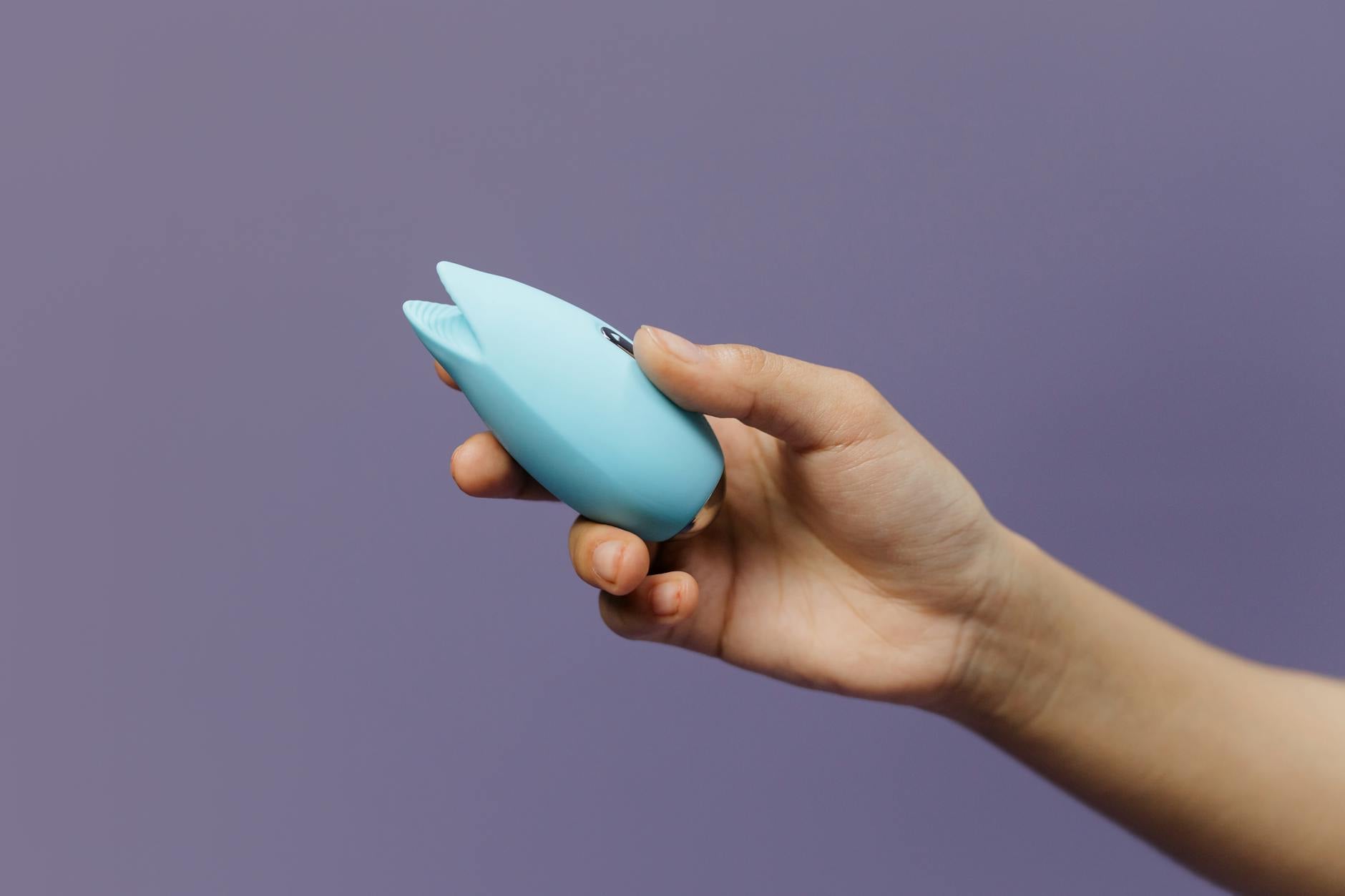
How to Use Lemon Vibrators When Clitoral Sensitivity Fluctuates Throughout Your Cycle
Let's be real. Your clitoris does not want the same thing every week. During the follicular phase, you might crave intensity. Come ovulation, you're probably more sensitive and want sustained pressure. By the luteal phase, direct stimulation can feel almost too much. Most people don't talk about this because we're taught pleasure is static, unchanging, always ready in the same way.
It isn't. And pretending it is wastes a lot of good orgasms.
This is where lemon vibrators become genuinely useful, not as a one-size-fits-all solution, but as a tool you learn to adjust throughout your cycle. The clitoral vibrator you use during menstruation is not the same clitoral vibrator you use right before ovulation. The settings change. The approach changes. Your pleasure stays consistent, but how you get there shifts week by week.
Understanding how your cycle affects clitoral sensitivity
Your clitoris has more nerve endings than almost anywhere else on your body, which makes it exquisitely responsive to hormonal fluctuations. During the follicular phase (first day of bleeding through ovulation), rising estrogen makes the clitoral tissue more engorged and less touch-sensitive. This sounds backward, but it means you can typically handle more direct pressure without discomfort. It's the phase where "turn it up" often feels exactly right.
Then comes ovulation, when estrogen peaks and testosterone spikes. For about 48 hours around ovulation, sensitivity increases but in a different way. The clitoris is engorged and reactive, but sustained, lighter stimulation often works better than high intensity. This is when people often report their most powerful orgasms, but only if they're not still using the settings that worked five days earlier.
The luteal phase (post-ovulation until your period) is when progesterone rises. Many people become significantly more sensitive to direct clitoral touch during this week. What felt perfect during the follicular phase can now feel sharp, overwhelming, or almost painful. This is not a sign something is wrong. It's a signal to change your approach.
Once menstruation begins, sensitivity often settles into a middle ground. Some people want more intensity to break through the heaviness. Others prefer gentler stimulation because the whole pelvic region feels tender. There is no universal rule here, which is exactly why paying attention matters.
Reading your clitoris throughout your cycle
The easiest way to start is to pay attention for three cycles. Not as research project, as actual pleasure tracking. What you're looking for is a pattern in when the same stimulation feels too much, just right, or not quite enough.
During the first week after your period, try noting which intensity settings on your lemon clitoral vibrator feel most satisfying. Most people move toward higher settings here. During the ovulation window, drop the intensity and focus on rhythm instead. Notice whether longer stimulation sessions feel better or shorter, more focused ones. Come the luteal phase, experiment with indirect stimulation. Instead of the concentrated pressure of the vibrator tip directly on the clitoris, try the sensation against the hood or the surrounding area.
After three cycles of gentle observation, you'll have a map of your own pleasure. This map becomes your reference point for adjusting how you use your lemon vibrator, your lemon adult toys, or any clitoral vibrator, depending on the week.
One thing that helps: most people find they can predict sensitivity shifts by tracking one or two simple markers. Does your clitoris feel more or less swollen than usual? Does it pull up or sit more forward? Is your general interest in intensity high or lower? These are not medical observations. They're just ways your body tells you what it wants.
Adjusting your lemon vibrator settings by cycle phase
Follicular phase (menstruation + first two weeks). Start at intensity levels 2 or 3 on your lemon vibrator and work up. Many people here can use the highest settings without discomfort. Try longer sessions, 20 to 45 minutes. Use direct pressure on the clitoris. If you're using a lemon sucker style vibrator, the suction can feel especially good during this phase. Pulse patterns often work better than constant vibration. This is the phase to experiment and push into sensation.
Ovulation window (typically day 12-16 of a 28-day cycle). Drop to intensity 1 or 2. Focus on rhythm and consistency rather than power. Try longer, slower movements. Many people report that during this narrow window, the sensation builds more intensely with less mechanical input. Sustained pressure with gentle pulsing often beats high intensity. This is when some people discover they can have multiple orgasms, but only if they're not fighting against overstimulation by using settings that felt great five days ago.
Luteal phase (post-ovulation until your period). Go indirect. Use the vibrator against the clitoral hood, the pubic mound, or the inner labia instead of the clitoris itself. Drop to levels 1 or 2. Shorter sessions often feel better than longer ones. If the direct approach feels painful or overwhelming, try using the vibrator externally, over underwear or through a thin fabric. This creates distance that feels exactly right. Many people also find that combining lemon vibrator stimulation with internal stimulation shifts where the sensation lands and makes it more tolerable.
Menstruation. This one's variable. Some people want nothing to do with vibration during bleeding. Others find it releases tension and eases cramping. If you want to use your lemon vibrators during your period, start low (levels 1 to 2) and focus on external stimulation of the whole vulva rather than direct clitoral work. Heat often pairs well with vibration here. A heating pad on the lower belly plus your lemon clitoral vibrator on a low setting can feel particularly good.
The practical rhythm for consistency
Here's what actually works: Before solo sessions, do a five-second check-in. How does your clitoris feel to light touch? Swollen and ready for intensity, or tender and asking for gentleness? Start there and adjust from the first touch, not from memory of what worked last week.
If you're partnered, this becomes a conversation too. "This week my sensitivity is different" is information your partner needs if toys are involved. How to Use Lemon Vibrators When Your Partner Initiates Less Often covers that dynamic more fully, but the principle is the same. Pleasure is not one static thing, and that's actually the good news.
Keep lubrication consistent across all phases. Your natural lubrication may shift, but water-based lube works the same way regardless of cycle phase. Use more during the luteal phase, when tissue tends to be drier. How to Use Lemon Vibrators When Lubrication Needs Increase With Age dives deeper into that, but the summary is simple: more lube, gentler approach, indirect stimulation. Those three changes adapt almost any vibrator to almost any sensitivity level.
Tracking without obsession
The goal here is not to turn pleasure into a data project. It's to build enough awareness that you stop assuming something is wrong when stimulation that felt perfect last week now feels uncomfortable. Nothing is wrong. Your body is just communicating what it needs.
After three months of casual observation, most people can predict their sensitivity shifts without thinking about it. Then the real advantage kicks in: instead of fighting your body or assuming you're broken, you adapt. You use your lemon clitoral vibrator differently across the month. You honor what your body is actually asking for, not what it asked for seven days ago.
This is when pleasure becomes reliably satisfying instead of hit-or-miss. When you know your own rhythm, and you have tools like adjustable-intensity lemon vibrators that actually respond to that rhythm, the whole experience shifts.
People also ask
Can my cycle really change how sensation feels?
Completely. Hormonal shifts alter blood flow to the clitoris, skin sensitivity, pelvic floor tension, and even how your nervous system processes sensation. It's not in your head. Studies on sexual response have found measurable differences in arousal speed, orgasm intensity, and sensitivity across cycle phases. Your clitoris is responding to real, measurable changes in your body.
What if I use hormonal birth control? Do I still have sensitivity shifts?
Yes, usually, but often less pronounced. Hormonal birth control flattens the dramatic peaks and valleys of a natural cycle, which means some people don't notice month-to-month shifts as clearly. That said, many people still experience week-to-week sensitivity changes even on birth control. You might need to pay closer attention to find the pattern, but it's usually there. Non-hormonal methods (copper IUD, condoms) don't change cycle-related sensitivity at all.
Is it normal for stimulation to hurt during certain weeks?
Yes. During the luteal phase, some people experience genuine discomfort with direct clitoral stimulation. This is not a sign to stop using vibrators. It's a sign to change your technique: go indirect, reduce intensity, add lube, try external-only stimulation, or switch to shorter sessions. If pain is sharp, sudden, or accompanied by other symptoms, check with a doctor. But mild tenderness during certain weeks is ordinary and manageable.
Can I use the same intensity settings all month if I'm careful?
Technically, yes. But why would you? Adjusting to match your actual sensitivity feels so much better. It's the difference between forcing a tool to work against your body and letting your body guide the tool. Spending an extra five seconds choosing the right intensity for this week is five seconds well spent.
How long does it take to figure out my personal pattern?
Three cycles is a good baseline. Some people see the pattern immediately. Others need a few months to recognize it clearly. Keep loose notes if it helps: a calendar mark for "sensitive week" or "intensity week" is usually enough. After three months of tracking, most people can predict their needs without writing anything down.
What if my cycle is irregular or I don't have one?
Pay attention to whatever rhythm your body has. Some people cycle longer than 28 days. Some skip months. Some have no cycle due to medication, surgery, or other reasons. None of that means sensitivity shifts don't exist for you. You might have a slower or less obvious pattern, but if you track sensitivity month to month, you'll likely still notice variation. Use that variation as your guide, regardless of whether it fits a calendar perfectly.
Your pleasure, on your schedule
The real insight here is simple: your body is not broken when it wants something different. It's communicating. And when you have tools like lemon vibrators that let you adjust to what it's actually asking for, pleasure becomes predictable instead of confusing.
Three months of loose attention to how your sensitivity shifts. After that, you have a map. You use that map. Everything gets easier.
If you're still figuring out which clitoral vibrator matches your baseline sensitivity, How to Choose a Lemon Clitoral Vibrator That Matches Your Sensitivity Level walks through that process. But once you have your vibrator, cycle-phase adjustment is just about listening to your body and trusting it enough to change your approach when needed. You deserve pleasure that fits your actual week, not some imaginary standard. Start there.