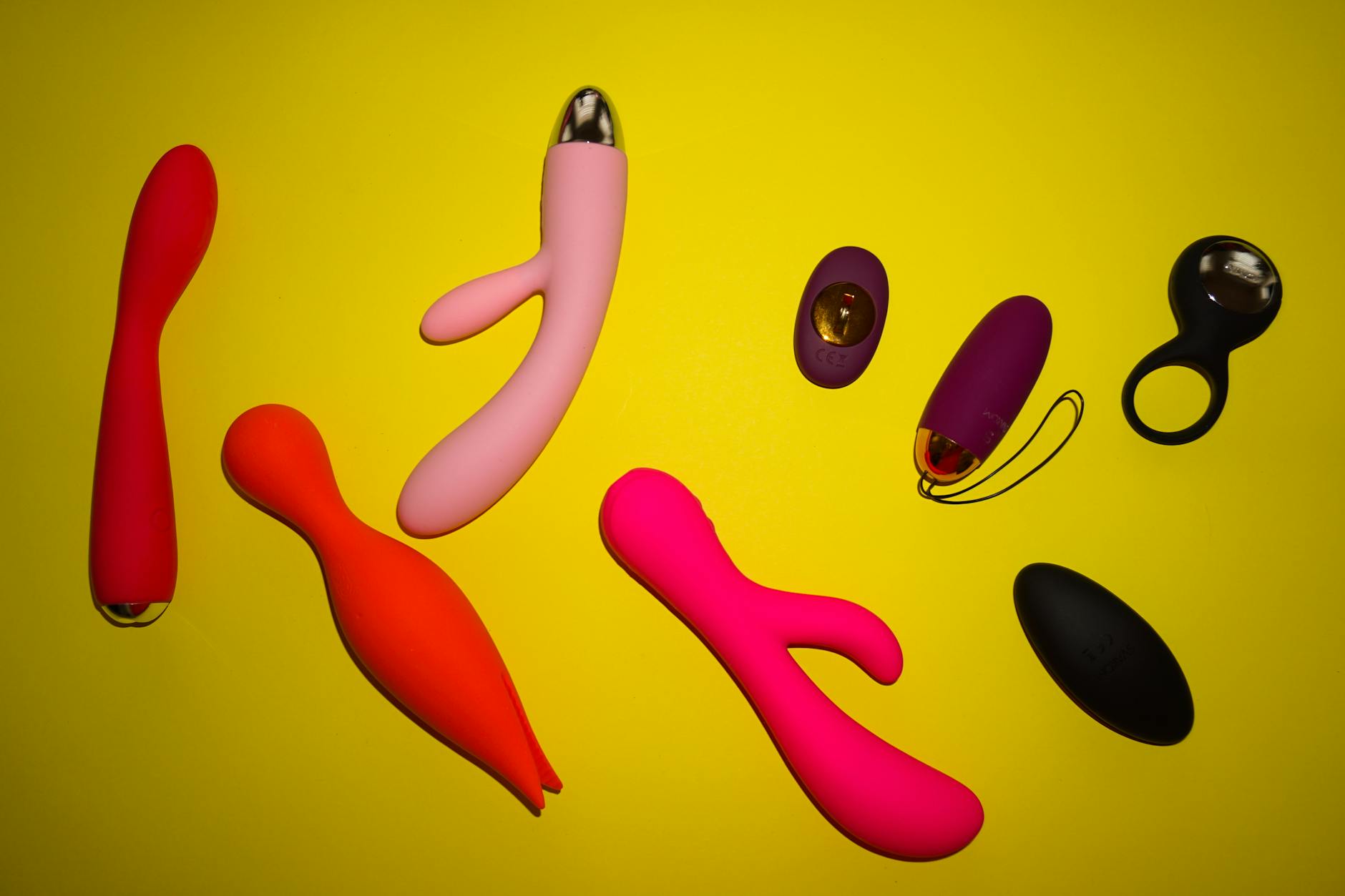
Perimenopause is not a single state. It's a monthly oscillation.
Unlike menopause, which is one hormonal cliff, perimenopause is a seesaw. Some months your estrogen feels almost normal. Other months it tanks. Progesterone swings wildly. Testosterone wobbles. Your vulva, clitoris, and brain are all wired to respond to these hormones, which means your pleasure experience literally changes throughout your cycle.
This is why a lemon vibrator that felt perfect in week one suddenly feels different in week three. It's not you. It's the hormonal terrain shifting beneath you.
How perimenopause rewrites your sensory map
During your reproductive years, hormones follow a fairly predictable 28-day rhythm. Your body learns the pattern. Then perimenopause arrives, and that pattern becomes a question mark.
Estrogen controls tissue thickness, blood flow, and lubrication. When estrogen dips, your vulval tissues thin slightly. The clitoris, which is heavily vascularized and estrogen-sensitive, responds to less blood flow by becoming less easily engorged. This happens gradually over days or weeks, then reverses when estrogen spikes again. The result is inconsistent sensation that has nothing to do with your desire or your body's capacity for pleasure.
Progesterone affects your nervous system's baseline excitability. High progesterone can make you feel less responsive to touch, more irritable during stimulation, more likely to need longer warm-up. Low progesterone can flip that switch. Testosterone, which your ovaries produce even in perimenopause, influences clitoral sensitivity and desire. When it's stable, sensation is snappier. When it dips, arousal takes longer.
So in one week, a lemon clitoral vibrator at pattern 4 feels just right. The next week, pattern 4 feels too intense. Neither response means anything is wrong. Your hormonal baseline shifted.
Why suction vibrators like lemon work better during hormonal flux
Traditional vibrators rely on direct mechanical vibration against tissue. That vibration intensity is fixed. If your tissue sensitivity is fluctuating, a fixed stimulus creates inconsistent experience.
Lemon vibrators use suction and pulsing, which work differently. Suction stimulates the entire clitoral body (not just the surface), pulling nerve-rich tissue toward the mechanism. This creates a broader, less localized sensation that feels less dependent on surface tissue thickness. When your estrogen dips and your vulval skin thins slightly, suction still engages the deeper clitoral structures. When your hormones surge and everything is more engorged, suction still works, just with a different intensity.
The pulsing patterns on lemon vibrators also matter during perimenopause. Steady patterns feel more predictable and less jarring when your nerve sensitivity is fluctuating. You're not chasing an increasingly intense vibration. You're anchoring to a rhythm.
This is why so many of my clients in perimenopause report that a lem vibrator feels "right" even when traditional vibrators feel hit-or-miss.
Mapping your own perimenopause cycle
Here's what I recommend: track your sensation changes alongside your cycle (or whatever you're using to monitor perimenopause phases). After three or four cycles, patterns emerge.
You might notice that weeks one and two feel responsive at lower intensities. Week three gets tender. Week four bounces back. Or you might see no pattern at all, which is also completely normal during perimenopause. The chaos is the point.
Once you know your own rhythm, you can adjust accordingly. This is not about "fixing" yourself. It's about working with your body instead of against it. Some people prefer to use their lemon vibrator only during high-sensation weeks. Others use the same device all month but rotate between patterns strategically. Neither is right. What matters is that you're not surprised or frustrated by variation.
The lubrication piece nobody talks about enough
During perimenopause, lubrication changes before sensation does. You might feel aroused and responsive, but your natural lubrication is lighter or less reliable than it was. This is not a sign that your body isn't interested. It's a sign that your estrogen is lower.
Water-based lubricant becomes even more important during this time. Not because you're broken, but because you're working with less endogenous lubrication. Adding lube makes suction work more smoothly. It also protects your thinning tissue during longer sessions. And honestly, it just feels better. There's no prize for avoiding it.
Some people find that their preferred lube viscosity changes during perimenopause. Higher-viscosity lubes feel protective when tissues are thinner. Lighter lubes might feel slippery and less controlled. It's worth experimenting.
Temperature sensitivity and the perimenopause surprise
One change that catches people off guard: during perimenopause, your temperature regulation goes haywire. Night sweats, hot flashes, chilling sensitivity to cold. This extends to genital sensitivity.
You might notice that your lemon vibrator feels different if it's been sitting in a cool room versus if you've warmed it in your hands. Your own genital temperature fluctuates more during perimenopause, which changes how stimulation feels. Some people find they prefer a slightly warmed vibrator. Others find the coolness is actually grounding.
Again, this is information, not a problem. If you discover you prefer your vibrator slightly warmed, warm it. If you want it cool, let it be cool. Your perimenopause is teaching you about your own body if you're willing to listen.
Orgasm shape changes (and that's actually fine)
Many people report that their orgasms feel different during perimenopause. Sometimes shallower. Sometimes more internal. Sometimes longer but less peaked. Sometimes multiple smaller peaks instead of one big one.
This happens because the architecture of arousal is shifting. With less consistent estrogen, the pelvic floor muscles don't fill with blood the same way. The clitoris might not swell as much. The vaginal opening might not relax as predictably. The orgasm that results from this different architecture feels subjectively different, even if it's equally pleasurable.
Here's the thing: this is not a downgrade. It's a remix. Your nervous system is learning to generate pleasure through a different physical pathway. Some people find their new orgasm pattern is actually more satisfying because it's less dependent on a single moment of peak sensation.
Lemon vibrators handle this variation well because the suction mechanism stimulates multiple areas of the clitoral network at once. You're not chasing one specific feeling. You're creating a broader sensation landscape.
Rebuilding your pleasure vocabulary
One of the most helpful things I've seen happen with clients in perimenopause is that they stop using "before" as the comparison point. You're not trying to recreate your sensation at 35. You're learning your sensation at 48 or 52 or whenever perimenopause landed for you.
This requires patience, some curiosity, and a willingness to let go of fixed expectations. It also requires good tools. A lemon vibrator, with its adaptable patterns and broader stimulus surface, is genuinely better for this exploration than vibrators designed for consistent, predictable response. You're not looking for consistency right now. You're looking for tools that work across a range of sensations.
Most of my clients find that once they stop fighting the hormonal fluctuation and start working with it, perimenopause becomes less of a loss and more of an opportunity to understand their body differently.
When to check in with a specialist
If your sensation changes feel painful instead of just different, talk to a doctor. If you're experiencing vulvar pain, burning, or extreme dryness that lube doesn't help, you might be developing genitourinary syndrome of menopause (GSM), which is treatable. If your clitoral sensitivity has completely disappeared and it bothers you, testosterone therapy is an option worth discussing.
But if you're just noticing that sensation fluctuates week to week and you're trying to find tools that work with that fluctuation, you're not broken. You're in perimenopause, and lemon vibrators are genuinely solid equipment for this particular journey.
FAQ
Why does my clitoral sensation feel stronger some weeks and weaker other weeks during perimenopause?
Your clitoral sensation directly responds to estrogen and testosterone levels. During perimenopause, these hormones fluctuate unpredictably from week to week. High estrogen brings more blood flow to your clitoris, making it more engorged and responsive to stimulation. Low estrogen does the opposite. Testosterone, which you produce in smaller amounts, also influences clitoral sensitivity. When it dips, arousal and sensation take longer to build. This isn't a malfunction. It's your body responding normally to hormonal chaos.
Can a lemon vibrator help with hormonal fluctuations in sensation?
Yes. Suction-based vibrators like lemon models stimulate the clitoral structure more broadly than traditional vibrators do. Because they engage deeper tissue rather than relying on surface vibration, they work more consistently across different hormonal states. When your clitoris is less engorged from lower estrogen, suction still reaches the nerve-rich tissue. When your hormones surge and everything is more sensitive, you can lower the intensity or switch patterns. This flexibility makes suction vibrators particularly well-suited to perimenopause.
Should I use the same vibrator intensity throughout my perimenopause cycle?
Not necessarily. Once you start noticing patterns in your cycle, you can adjust your approach. Some people use lower intensities during lower-sensation weeks and higher intensities during peak weeks. Others stick with mid-range patterns that feel consistent enough across fluctuation. There's no universal rule. Tracking your own rhythm for a few months helps you figure out what works best for your body.
Does lubrication help when perimenopause reduces natural lubrication?
Completely. During perimenopause, natural lubrication becomes lighter and less reliable because estrogen is lower. Adding water-based lubricant protects your tissue, makes suction work more smoothly, and generally feels better. You're not compensating for brokenness. You're adapting to a real hormonal shift. Using lube is the right move.
Can hormonal fluctuations during perimenopause change what kind of orgasm I experience?
Yes. The architecture of arousal depends on hormone-driven blood flow and muscle tone. When those shift, your orgasm shape can shift too. You might experience more internal sensation, multiple peaks, longer buildups, or different intensity patterns. This isn't a loss. It's a remix. Some people find their new orgasm pattern is more satisfying because it's less dependent on peaking at one specific moment and more distributed across the experience.
Is perimenopause affecting my pleasure, or is something else wrong?
If your sensation changes feel unpredictable but not painful, perimenopause is almost certainly the cause. If you're experiencing pain, burning, extreme dryness, or complete loss of clitoral sensation, check with a doctor. Genitourinary syndrome of menopause (GSM) is common, very treatable, and worth addressing. But if you're just noticing that sensation fluctuates from week to week without pain, you're navigating normal perimenopause, and good tools like lemon vibrators can absolutely help you through it.
The long view
Perimenopause lasts years, not months. You're going to learn a lot about your body during this time if you're paying attention. The lemon vibrators and other tools you invest in now should work across the range of sensations you'll experience, not just during your best weeks.
Consistency matters less than flexibility. Intensity matters less than adaptability. And understanding your own rhythm matters more than chasing someone else's experience of menopause or perimenopause.
Your pleasure doesn't end when your hormones get unpredictable. It just requires different equipment and a willingness to let yourself feel different things at different times.
Ready to explore what works for your body right now? Get in touch with us if you have questions about finding the right tool for your perimenopause journey.