Let's start with the honest part
Your fingers are great. Your partner's fingers are probably great too. But they are not a lemon clitoral vibrator, and pretending they are the same thing leaves pleasure on the table. The difference isn't emotional or psychological. It's biomechanical.
The clitoris is engineered for precision stimulation. Eight thousand nerve endings live in a space about the size of a pencil eraser. That density means tiny variations in pressure, rhythm, and sustained tension matter wildly. Fingers, no matter how skilled or attentive, can't deliver what a purpose-built lemon vibrator can.
How fingers fall short
First, let's be clear: this isn't a critique of manual stimulation or of partners who use their hands. It's a recognition of physical limits.
Finger stimulation relies on friction. You're moving across the skin surface, which feels good, but it also means the pressure changes constantly as your hand tires, shifts position, or adjusts based on feedback. Fatigue kicks in after 10-15 minutes for most people. Your finger gets numb from repetition. The angle becomes harder to maintain. You lose precision.
Second, fingers deliver inconsistent pressure. Even if you're trying to maintain the same rhythm, micro-variations happen. Your hand gets tired. You adjust. You shift weight. These tiny changes feel like rhythm breaks to the body receiving the stimulation, forcing the nervous system to recalibrate instead of staying in the escalation zone.
Third, there's the attention trade-off. If you're using your own fingers, your brain is split between sensation and motion control. If a partner is using theirs, you're both managing the experience together, which introduces communication delays. "A bit higher." "Slower." "Wait, that was perfect, go back." None of that is bad. But it's not the same as a tool calibrated to do one job perfectly.
What lemon vibrators actually do better
A lemon clitoral vibrator, especially one designed with suction technology like the Lem, works on completely different principles.
Sustained, consistent pressure. The suction mechanism creates a seal around the clitoral tissue and maintains pressure without fatigue. Your hand isn't tiring. The intensity isn't drifting. This consistency matters because the body can layer stimulation. Instead of resetting every time pressure changes, arousal builds in a linear, predictable way. That's why orgasms from lemon vibrators often feel more intense. Your nervous system isn't managing inconsistency. It's just climbing.
Precision stimulation without friction. Suction doesn't rely on you rubbing the surface of the clitoris. Instead, it gently draws tissue into the cup and stimulates the nerve endings through that seal. This means you're not creating the kind of friction that leads to numbness or irritation. People who find traditional vibration too intense often switch to suction-based lemon sexual toys because the sensation feels rounder, less mechanical.
Hands-free pleasure. This is underrated. When you're not managing the toy, your hands are free to explore elsewhere. Your partner's hands are free. You can shift position without losing pressure. You can add penetration. You can focus entirely on sensation instead of also managing logistics.
Customizable intensity without losing rhythm. Lemon vibrators come with multiple intensity levels. You can dial intensity up or down without breaking the rhythm pattern. Fingers can't do that. You're either pressing harder or softer, which always creates a micro-pause or adjustment period.
The neurology underneath
The clitoris is the only part of the human body whose sole function is pleasure. That's not poetic. That's anatomical fact. It has no reproductive role. Its only job is sensation.
That dense nerve concentration means the nervous system is exquisitely tuned to detect patterns. Your body notices rhythm disruptions faster than you consciously register them. When you're using fingers, those micro-disruptions are constant. When you're using a device engineered to maintain perfect rhythm, something shifts. Arousal accelerates because the nervous system can trust the stimulus isn't going to change.
Lemon vibrators also deliver higher frequency stimulation than fingers. The human hand, even moving deliberately and fast, tops out around 5-10 movements per second. Vibrators operate at 80-150+ cycles per second depending on settings. That difference means the nerve receptors are being stimulated at speeds that fingers physically can't achieve. It's not better or worse. It's a completely different sensation, one that some bodies find more direct, more focused, easier to climax from.
The pleasure plateau
Here's something I see over and over in my practice: people who believed they had difficulty with orgasm often discover they don't. They had difficulty with finger stimulation specifically. The consistency and precision of a lemon clitoral vibrator changes everything.
This is especially common if you've spent years adapting your body to whatever stimulation was available. You learned to make fingers work. Your body got efficient at it. But that doesn't mean fingers are optimal. You just got good at compensating.
When you switch to a tool that gives your nervous system what it actually wants, the response is often shocking. Faster arousal. More intense sensation. Easier climax. Not because anything was broken. Because you finally had the right tool.
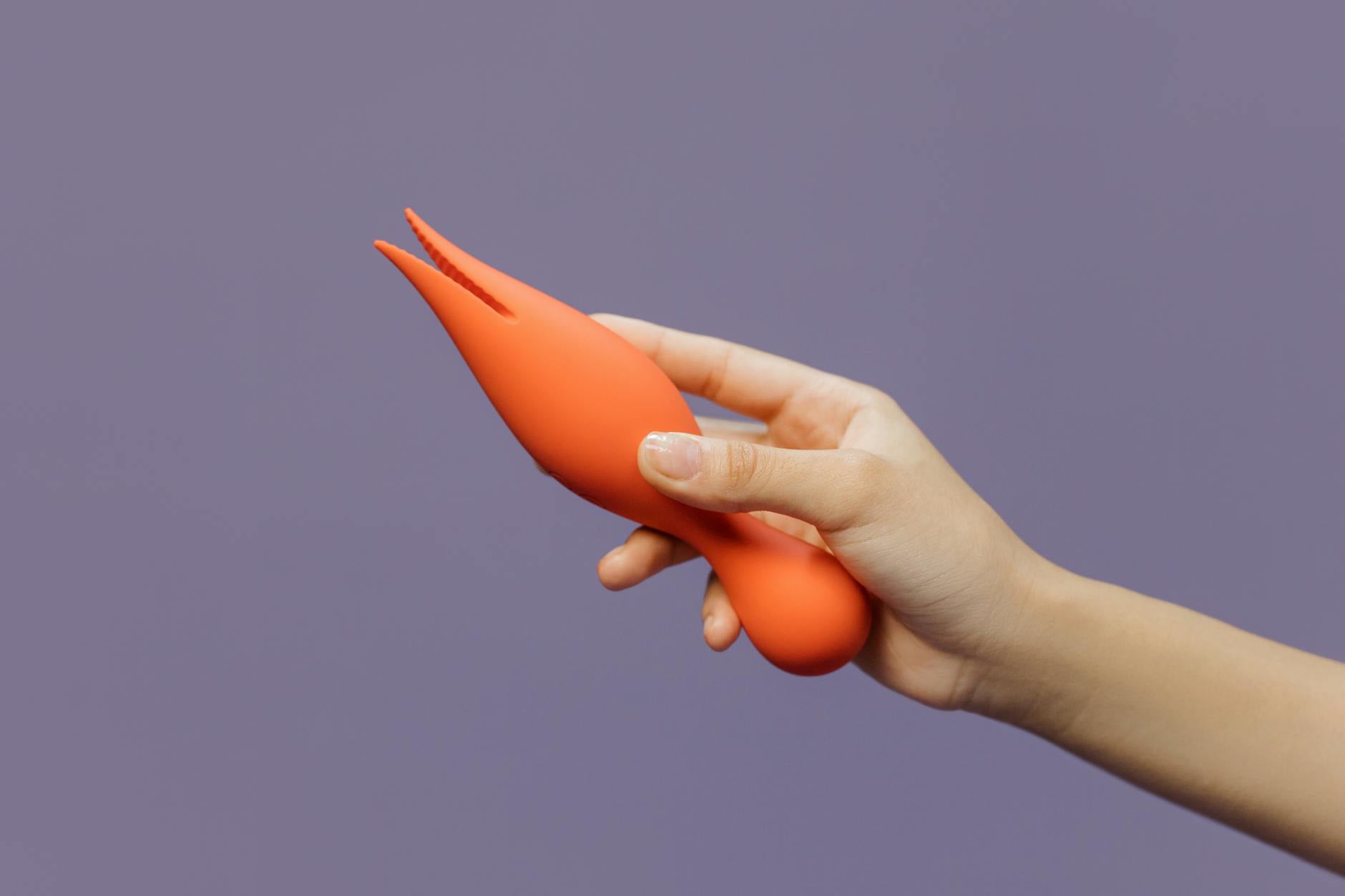
Photo by cottonbro studio on Pexels
Why suction beats traditional vibration
If you're comparing lemon vibrators specifically to traditional vibration toys, the difference comes down to mechanism. Vibration shakes. Suction pulls and releases. That pull-and-release rhythm stimulates nerves differently than pure vibration does.
For the clitoris, suction is often more effective because it stimulates a larger surface area and works with the tissue instead of against it. The seal created by a lemon clitoral vibrator means gentle tissue engagement rather than surface-level buzzing. If you've tried traditional vibrators and found them too intense or too numb-making, suction-based lemon sexual toys are worth exploring specifically because they're a totally different mechanism.
Many people find they can use a lemon vibrator for longer without sensitivity drop-off. The tissue engagement is gentler, even when intensity is high, because you're not creating the kind of friction-based numbness that comes from traditional vibration against sensitive skin.
The partner dimension
Honestly though, here's where it gets interesting: lemon vibrators don't replace partners. They change what partners can do.
When you're both using a suction-based toy during partnered sex, something shifts. Your partner isn't managing stimulation logistics. They're not trying to maintain the perfect pressure or rhythm. The toy is doing that. Your partner gets to focus on you. On connection. On touching you in other ways. On watching and responding.
I've had clients tell me that introducing a lemon clitoral vibrator during partnered sex actually deepened their connection because the dynamic changed. The focus moved away from "can I make this happen manually" to "how do we explore this together." That's a completely different conversation.
When to choose a toy over fingers
You don't have to choose. But here's when lemon vibrators shine:
If you want faster, more intense climax, a tool will get you there quicker than manual stimulation. If you have nerve sensitivity issues, suction often feels better than friction-based touch. If you want hands-free sensation, it's the only option. If you're exploring different sensations, vibrators open doors that fingers can't. If you want consistent, predictable stimulation, toys beat the variability of human touch every time.
For solo play, the advantage is obvious: you get precision, consistency, and hands-free pleasure without managing anything. For partnered play, the advantage is freedom. Your partner isn't exhausted. You're not managing feedback. You're both just present.
FAQ
Can I use a lemon vibrator if I've never used one before?
Absolutely. Start on a lower intensity setting. The sensation is usually gentler than you expect because suction works with tissue rather than just vibrating against it. Spend a few minutes exploring how it feels. Most people adjust within a session or two.
Do lemon vibrators replace partnered touch completely?
No. They complement it. Many people use them during partnered sex, or use them solo and incorporate partnered touch separately. The tool isn't meant to replace your partner. It's meant to give you sensations and consistency that fingers can't deliver.
Why do lemon vibrators feel different than my other vibrators?
Suction-based lemon clitoral vibrators use a completely different mechanism than traditional vibration toys. Instead of buzzing against tissue, they gently seal and pulse. This feels rounder, less intense on the surface, and often more effective for people who find traditional vibration too mechanical or too numbing.
How long can I use a lemon vibrator without soreness?
Most people can use one for 20-30 minutes comfortably, especially on lower intensity settings. If you experience any soreness, take a break. Lemon vibrators are designed for extended use, but your body will always tell you if you need to dial back time or intensity.
Will using a lemon vibrator change what feels good with my partner?
Your preferences might shift as your body discovers new sensations. That's not a bad thing. It's just your nervous system figuring out what actually works for you. Many people find that exploring toys solo helps them communicate better with partners about what they actually want.
Is it normal to prefer vibrators over fingers?
Completely normal. Fingers have limits. Tools don't. Your preference for consistent, precision stimulation says nothing negative about you or your partners. It just means you know what your body responds to best.
The bottom line
Fingers are accessible, intimate, and always available. They're great for a lot of things. But when it comes to clitoral stimulation, lemon vibrators offer precision, consistency, and sustained pressure that human touch physically can't match. The clitoris is built for specific kinds of stimulation, and a well-designed lemon clitoral vibrator simply delivers that more effectively than fingers ever could. That's not romance. That's just biomechanics. And your pleasure deserves to be informed by what actually works, not by what tradition suggests should work. If you're curious about experiencing the difference, tools like the Lem are designed exactly for this kind of exploration. Your body might surprise you with what it's actually capable of.