Here's the thing about anxiety and sex
Anxiety doesn't just kill the mood. It hijacks your body's ability to feel anything at all. Your nervous system gets stuck in fight-or-flight, blood flows away from your genitals, sensation dulls, and suddenly the person you trust most feels like a stranger. You're not broken. Your body is just protecting you from a threat your brain thinks is real.
The problem with most vibrators, and most advice about anxiety, is that they skip the step your nervous system actually needs: a gentle on-ramp. You can't go from panicked to orgasmic by willpower alone. But you can use graduated intensity to signal safety to your nervous system, one level at a time.
Why graduated intensity matters more than you think
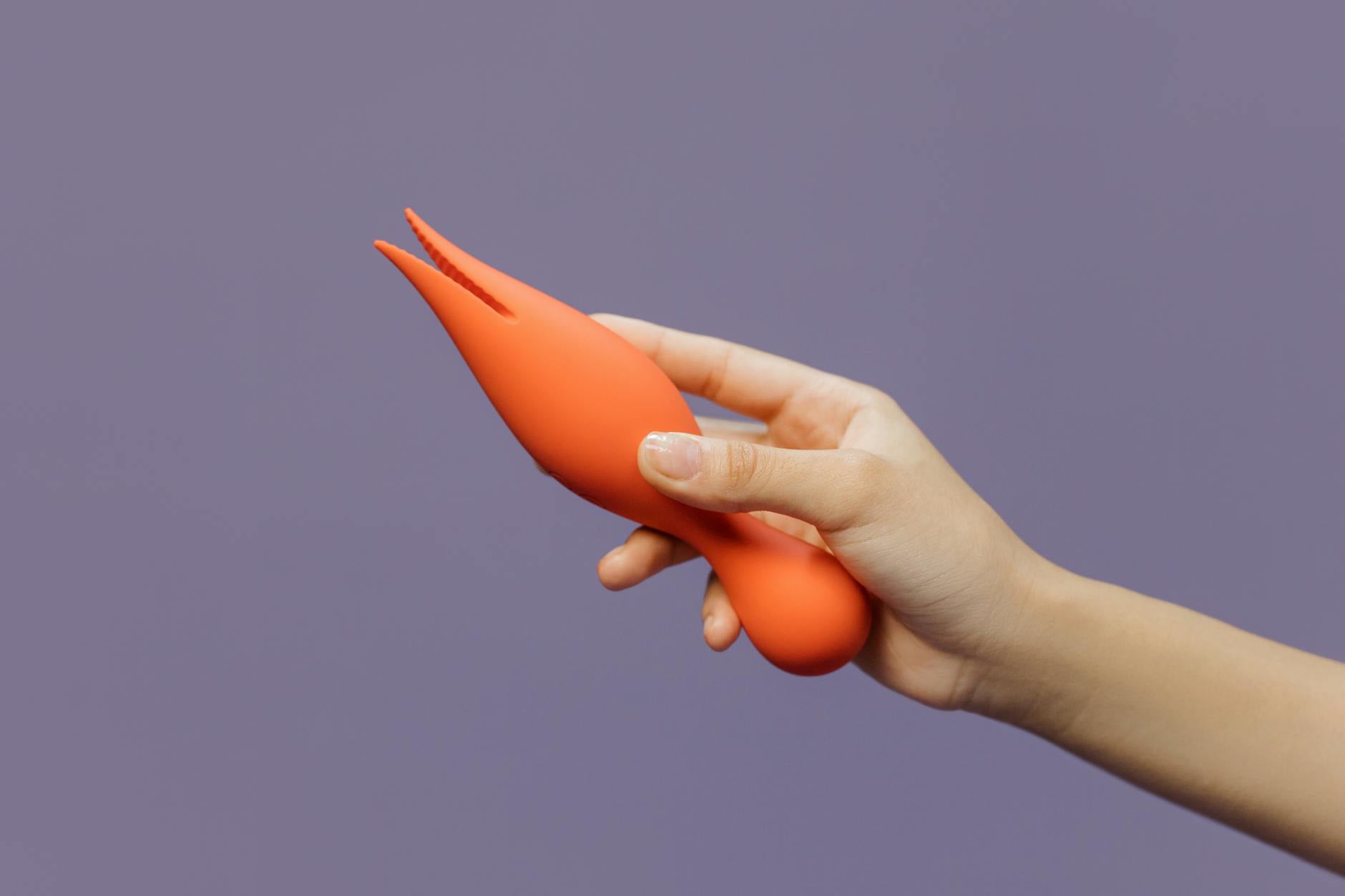
This is where a lemon clitoral vibrator changes the game. Unlike traditional toys that often have only two settings (off and overwhelming), the lem vibrator and similar suction toys give you seven distinct intensity levels. That's not a luxury. That's neurology.
When you start at level 1, your body isn't shocked into arousal. It's invited into it. Your brain registers the sensation as manageable, your nervous system relaxes slightly, and your body begins to respond rather than defend. By the time you reach level 4, you've already downregulated your anxiety. Levels 5-7 become about genuine pleasure, not desperation.
I've worked with dozens of clients who'd given up on partnered sex because anxiety made it impossible to stay present. They'd buy a vibrator, turn it on full intensity, feel overwhelmed, and conclude they were broken. They weren't. They just needed a different tool.
How your nervous system actually responds to graduated intensity
Your vagus nerve runs from your brain to your genitals. It's the highway your nervous system uses to communicate with your sexual response. When you're anxious, your vagus nerve is sending "shut down" signals. Arousal requires the opposite: a state called parasympathetic activation, where your body feels safe enough to open.
Starting at level 1 on a lemon vibrator does something specific. It creates a controlled, predictable sensation that your brain can process without triggering threat. You feel the stimulation. You notice it's manageable. Your nervous system registers data that contradicts the "danger" signal.
Then you move to level 2. Same thing. By level 3 or 4, your nervous system has received enough evidence of safety that it begins to relax the protective barrier. Blood flow shifts toward arousal instead of survival.
This is why intensity levels matter. A vibrator without them forces you to either endure nothing or endure everything, with no middle ground for your nervous system to acclimate.
The anxiety spiral and how intensity control breaks it
Here's the loop that kills sex: you're anxious about being anxious. You start to feel disconnected from your body. That disconnection makes you more anxious. By the time your partner touches you, you're in full spiral, and no amount of stimulation feels good because your brain is too loud.
With graduated intensity, you interrupt that loop early. You start at a level so gentle it barely registers as threatening. You notice you can handle it. Small win. Your nervous system releases a tiny bit of tension. You move up a level. Another small win. By the time you're at level 5, you've had four or five micro-experiences of success instead of one massive demand on your body.
This isn't just feel-good thinking. Graduated exposure is one of the most clinically effective ways to reduce anxiety in any domain. Sex is no exception. A lemon clitoral vibrator's intensity settings are doing the work of cognitive behavioral therapy in real time.
When anxiety is really about control
Many people with sex anxiety aren't actually afraid of pleasure itself. They're afraid of losing control. Partner-driven sex feels unpredictable. You can't slow your partner down. You can't tell them "hold on, I need a breath." You can't control the pace or intensity.
A vibrator with multiple intensity levels gives you back control. You decide when to escalate. You choose the pace. If level 3 is perfect but level 4 feels like too much, you stay at 3. No negotiation. No performance pressure. No shame.
I've had clients tell me that using a lemon vibrator with a partner is the first time they've experienced pleasure without panic because they held the remote, metaphorically and sometimes literally. Control isn't selfish in sex. It's the prerequisite for relaxation. Relaxation is the prerequisite for arousal.
Pairing intensity control with breathing
Intensity levels work best when you're also managing your breath. Anxiety collapses your breathing. You start shallow, holding your breath, or hyperventilating. Your nervous system reads that as confirmation that something's wrong.
When you're using a lemon vibrator at level 1 or 2, the low intensity creates space for you to remember how to breathe. Deep exhales activate your parasympathetic nervous system. Level-matched stimulation plus intentional breathing is a one-two punch against anxiety.
I usually recommend this: start at level 1, and focus for two minutes just on breathing and noticing the sensation without trying to feel anything in particular. Just data collection. Then move to level 2 for another minute or two. Same thing. By the time you're ready to escalate further, you've already reset your nervous system.
The role of predictability
Anxiety hates surprises. Your nervous system needs to know what's coming next. This is why foreplay matters so much for people with anxiety. Gradual progression signals safety. Sudden intensity escalation signals threat.
When you're using intensity levels intentionally, you're creating that predictability. You know what level 2 feels like. You choose when to move to level 3. There's a clear roadmap, and your brain relaxes because it can anticipate what's next.
Compare this to a partner touching you with unpredictable pressure, or a vibrator with only on-off settings that flip you from calm to overstimulated. Your nervous system stays braced. You stay in threat mode. Pleasure becomes impossible.
When to use lower intensities even outside anxiety
This isn't just an anxiety tool. Many people discover that they actually prefer lemon vibrator suction at lower intensity levels even when they're calm and connected. The sensation is more nuanced at level 2-3 than it is at level 7. You feel individual nerves responding rather than a blunt force. Orgasms from lower intensity sometimes feel deeper because you're not numb from overstimulation.
Once you've used intensity as an anxiety management tool and experienced success, you might find you just prefer it that way. There's no rule that says faster and harder is better. The entire point of having graduated settings is that you get to choose what actually works for your body.
If anxiety still shows up
Intensity control is a powerful tool, but it's not a cure-all. If you're dealing with significant trauma, relationship conflict, or clinical anxiety, a lemon vibrator helps you manage the physiological response, but talking to a therapist matters too. I'm always amazed by how much sex changes when couples work through the actual relationship dynamics underneath the anxiety.
But as a practical, immediate strategy for staying present during sex and managing your nervous system in real time, graduated intensity levels work. They work because they respect how your body actually functions instead of fighting against it.
FAQ
How do I know which intensity level is right for me?
Start at level 1 and stay there for at least a minute. You should feel the vibration but not feel overwhelmed by it. If level 1 feels too intense, you're more anxious than you realized and that's fine. Spend time at level 1 until it feels manageable, then move up. The right level is the one where you can breathe and stay present, not the one that creates the most sensation.
Can I use intensity levels if I'm with a partner?
Absolutely. In fact, partners often appreciate it because it takes pressure off them. You're managing your own arousal and anxiety with the tool. Your partner can focus on connection rather than guessing what pace you need. Some couples find that one partner holding the intensity remote while the other is inside them creates a sense of shared control that's deeply connecting.
Does using lower intensity mean I'm not really aroused?
No. Lower intensity stimulation can create very different sensations than higher intensity, not weaker ones. Many people find that level 3-4 on a lemon clitoral vibrator creates more localized, nuanced sensation than level 7. It's like the difference between a whisper and a shout. The whisper can be more intimate and easier to focus on. Neither is better. They're just different.
Will I get used to lower intensity levels and need to keep turning it up?
Sometimes, yes, but not always. Sensation adaptation is real. But it's also usually a sign that you've successfully reduced your anxiety enough to tolerate more sensation. That's progress, not a problem. When you get comfortable at level 4, you can explore level 5. But plenty of people find a sweet spot at level 3-4 and stay there indefinitely because it works.
What if my partner thinks I should need higher intensity?
Your pleasure isn't a performance for your partner. The goal is that you feel good and stay present. If that happens at level 2, that's the right level. A partner who tries to push you to higher intensity because they think you "should" be using it that way is not respecting your nervous system. That's worth a conversation outside the bedroom.
Can intensity control help with anxiety that's not about sex specifically?
Yes. Many people find that using a lemon vibrator at low intensity helps with general anxiety management because it's calming, embodying, and gives your nervous system something manageable to focus on. You're not trying to do anything except feel present. That paradoxically reduces anxiety even outside sexual contexts.
The bottom line
Anxiety during sex isn't a character flaw. It's your nervous system doing its job too well. And the solution isn't willpower or reassurance from a partner. It's tools that let you ramp your nervous system down gradually instead of demanding it switch on like a light. A lemon clitoral vibrator with graduated intensity levels gives you that tool. Start low. Stay present. Move at your own pace. That's not selfish. That's how your body actually heals.