
Here's the thing about new partners and toys
You're attracted to someone. The sex is good, or at least promising. And then you think about introducing a clitoral vibrator, and suddenly your brain floods with every self-conscious thought it can manufacture. What if they think you're not satisfied with them? What if they feel threatened? What if it kills the mood? What if, what if, what if.
Listen. Those questions are real and worth asking. But they're usually not about the toy itself. They're about what you think the toy means about you, or about what your partner will think it means.
Why self-consciousness shows up in new relationships
When you're early in a relationship, there's an invisible performance happening. You're still figuring out if this person is safe, if they're trustworthy, if they're someone you want to be truly known by. That performance doesn't feel like a performance at the time. It feels like being yourself. But you're being a version of yourself that's edited, optimized, a little bit curated.
Introducing sex toys into that dynamic feels like breaking character. It feels like saying: "By the way, I have needs you can't meet alone, and I need tools to get there." Which is true. And which is also completely normal.
The self-consciousness usually isn't about the toy. It's about being fully seen.
What actually worries partners (and how to reframe it)
I've talked to hundreds of couples navigating this exact moment. The fears break down into three categories, and they're worth naming directly because most of them dissolve the second you say them out loud.
"They'll feel inadequate." This is the big one. You introduce a lemon clitoral vibrator and your new partner reads it as a referendum on their sexual skills. But here's the thing: if you frame it right, it's actually the opposite. You're saying, "I trust you enough to be vulnerable about what I need. I want you here while I explore this." That's intimacy, not rejection.
"They'll think I'm weird or too experienced." New relationship energy comes with assumptions. You might worry that mentioning toys signals you're hypersexual, or broken, or desperate. Most partners actually find it attractive. Confidence in your own pleasure is sexy. Not performing for them? Even sexier.
"It will feel clinical or awkward." Sex toy conversations don't have to feel like a medical procedure. They can be playful, curious, genuinely fun. If you're nervous, your partner probably will be too. If you're curious and a little amused by your own self-consciousness, that energy is contagious.
The conversation framework that actually works
Don't make this a big serious talk. Make it casual and actually follow through.
The opener: "I've been thinking about trying something new, and I'd like your input." Not permission. Input. That distinction matters. You're not asking if it's okay. You're inviting them into something.
Then be specific without over-explaining. "I have a lemon vibrator I want to try. I think it would feel really good, and I'd like you to be part of that." Stop talking. Let them respond.
If they're curious, show them. If they're hesitant, ask what's up. Usually it's one of the three worries above, and naming it directly dissolves it. "Are you worried I'm not happy with how things are?" creates space for a real conversation, not a defensive one.
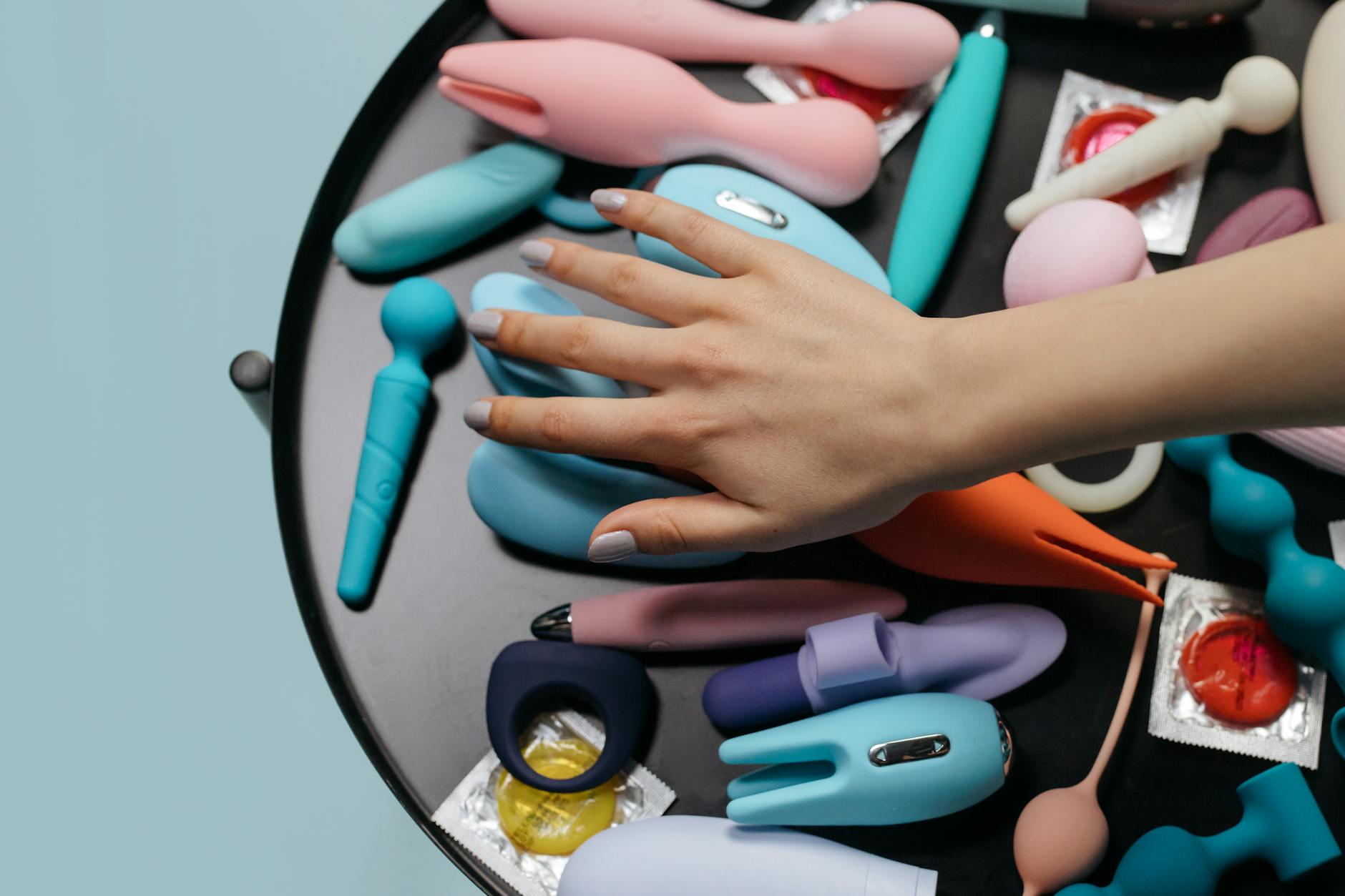
Photo by cottonbro studio on Pexels
How to use a lemon vibrator together without it feeling awkward
Start small. You don't need a whole production. You need five minutes and willingness to laugh if something feels weird.
First time? Show them the toy. Let them hold it. Let them turn it on and feel the vibration. This removes the mystery. It's just plastic and motors. Not a threat.
Then: "I'm going to try it solo first, and you can watch or help, or just be here." Some partners want to be active. Some want to watch. Both are fine. Let them choose.
If they want to help, walk them through what you like. "Start with pattern 2" or "I like more pressure on the right side." You're not giving performance feedback. You're giving pleasure directions. That's a turn-on for most partners, not a rejection.
Don't expect instant chemistry. You might need two or three times before it feels natural. That's completely normal. New things always feel slightly weird before they feel good.
The role of lubrication and comfort
Water-based lubricant is your friend here, partly for pleasure and partly for practicality. Lemon clitoral vibrators work best with a light layer of lube. It also signals: this is intentional, this is prepared, this is something I care about getting right.
If you're self-conscious, having everything set up properly paradoxically makes you feel less weird. You're not scrambling. You're not apologizing. You're simply ready.
When your partner actively wants to participate
This is where a lot of couples find that introducing toys actually deepens connection. Your partner holds the vibrator. Watches your face. Learns what makes you light up. That's not performance. That's intimacy.
Some partners find it incredibly arousing to watch. Some become fascinated by the physiology of it, the way your body responds. Some want to alternate or incorporate it into their own pleasure.
You might discover things you didn't know about yourself. "Oh, I like it better when you hold it at this angle." Or "It feels amazing when you slow down the pattern right before I come." These aren't criticisms of your partner. They're collaborations.
If your partner is genuinely uncomfortable
Sometimes you'll hit actual resistance. Not performance anxiety. Actual "I don't want to do this" energy.
That's data. Not rejection of you. Data about where they are, what they're comfortable with, what they need.
You get to decide if that's a dealbreaker. In a new relationship, you probably don't need to. You can shelve it. Solo play with a lemon vibrator when you're alone is completely fine. Your pleasure doesn't require their participation.
But if this is someone you see yourself with long-term, this conversation matters. "Can we talk about why this feels uncomfortable?" opens dialogue. Sometimes it's insecurity. Sometimes it's past baggage. Sometimes it's actually just not their thing, and you need to decide if you're okay with that.
The self-consciousness usually fades fast
What's wild is how quickly this feels normal once you've done it once. The first time you use a lemon clitoral vibrator with a partner present, you might feel exposed. By the third time, you're joking about it. By month three, it's just part of your sexual repertoire.
The self-consciousness wasn't about the toy. It was about being seen. And most partners, when given the chance to see you fully and know what you actually want, respond with curiosity and desire. Not judgment.
You deserve pleasure that's collaborative, not compartmentalized. That starts with one conversation and a willingness to feel a little awkward for five minutes.
People also ask
How do I know if my new partner is open to using toys?
You don't know until you ask. But you can read some signals. Partners who are curious about your pleasure, who ask what you like, who talk openly about sex in general, tend to be more receptive. The only real way to find out is to bring it up casually. Their response tells you everything. And if they're hesitant, that's information, not rejection.
Should I mention I have toys before we get sexual?
You don't owe anyone a disclosure before things get physical. Toys aren't a character trait you need to confess. But early enough that it doesn't feel like a surprise mid-sex? Yeah. Sometime in the first few weeks, if you know you want to incorporate them. That gives both of you mental space to process.
What if I'm more experienced with toys than my partner is?
That's actually an advantage. You can lead gently. You can normalize it by treating it as totally casual. You can also frame it as something you're exploring together, not something you're teaching them about. The dynamic shifts from "experienced person bringing in inexperienced partner" to "two people curious about pleasure."
Is it weird to use a lemon vibrator if my partner watches?
Nope. Some people find it incredibly intimate. You're not performing for them. You're letting them see what you actually want and how your body responds. That's trust and vulnerability. Most partners find it hot.
What if I feel self-conscious even after they say they're into it?
That's normal. Self-consciousness isn't always rational. It's a nervous system response. Your job is to do it anyway, while you're nervous. By the second or third time, your nervous system will catch up to the reality that this is safe and wanted. Discomfort in the moment doesn't mean you're doing something wrong.
How do I bring it up if we've already had sex without mentioning toys?
Just bring it up. "I've been thinking about trying this, and I want to know if you'd be open to it." You don't need to explain why you didn't mention it before. You don't need to apologize for having wants that emerged after you started sleeping together. "I want to try this now" is a complete sentence.
The real shift
What changes when you introduce toys to a new partner isn't your desirability. It's your self-knowledge. You're saying: I know what I want. I'm not waiting for someone else to figure it out. I'm willing to be vulnerable enough to ask for it. That's not weird. That's powerful.
The self-consciousness fades because you realize the toy wasn't the risk. Being known was. And most people, when given the chance, actually want to know you more.
If you're sitting with this decision right now, the next step is the conversation. Not a performance. Not an apology. Just honesty about what you want and curiosity about whether your partner wants that too. Sometimes the answer is yes, and you discover a whole new dimension together. Sometimes it's no, and you learn something important about compatibility. Both outcomes are useful information.
Your pleasure matters. And if it matters enough to think about, it matters enough to ask for it.