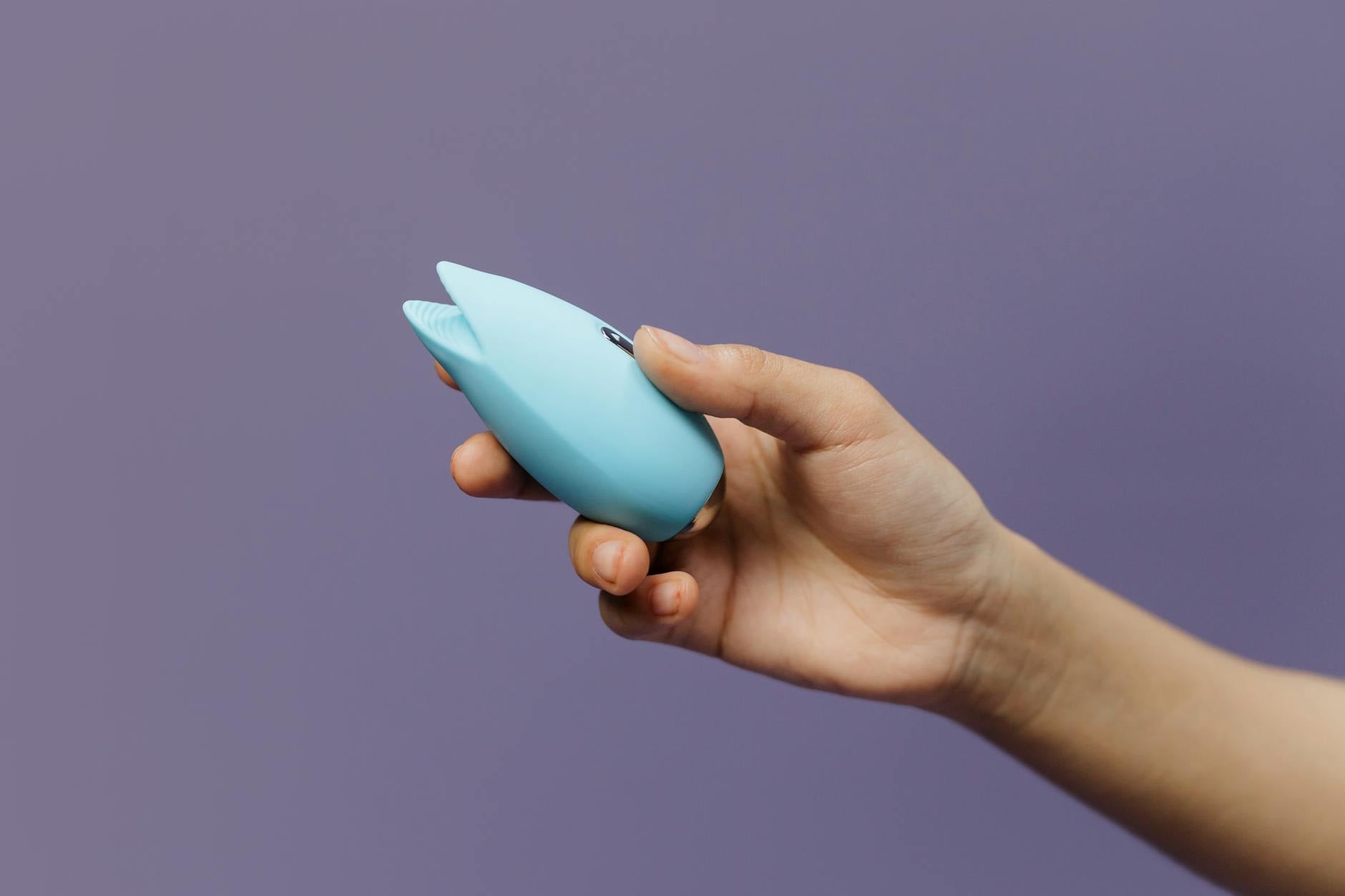
Let's be real about rushing
You're touching yourself and there's this background hum of guilt. Someone might walk in. You have dishes. Work email sits unanswered. And so somehow, solo pleasure becomes a race to the finish line instead of something you actually want to do. That's not pleasure. That's checking a box.
Here's the thing: the rush doesn't come from vibrators or technique. It comes from the belief that your pleasure is something to squeeze in around "real" life instead of being part of it. And once that belief is planted, even the best lemon clitoral vibrator can't fix it.
But your mindset isn't the whole story. The way you use your vibrator, the environment you create, and how you think about time all change whether sex feels like a luxury or a chore.
Why rushing actually kills what feels good
Arousal isn't a sprint. It's a staircase with a landing on every step. When you're rushing, you skip steps. Your body is still climbing but your mind has already arrived, and the disconnect is the entire problem.
When you're tense and watching the clock, your pelvic floor tightens. Blood flow concentrates differently. The neural pathways that lead to deeper pleasure literally need time to activate. A clitoral vibrator can work around some of that, but not if your nervous system is in fight-or-flight mode.
I've worked with dozens of clients who thought they "couldn't" come during solo time. Once we removed the time pressure, everything changed. The vibrator wasn't different. Their relationship to having it was.
Create a boundary that feels good
The first move is permission. Not the abstract kind. The actual, scheduled, protected kind.
Pick a time slot where interruptions are genuinely unlikely. Not "I'll try to find time," but "I have this window." Thirty minutes is ideal. If thirty feels impossible, start with fifteen. The length matters less than the certainty.
Tell someone if you share space. "I need an hour to myself on Sunday morning" is a complete sentence. You don't owe explanation. You don't need them to understand why. Boundaries don't work if you're negotiating them in your head while you're supposed to be relaxing.
If privacy is the actual barrier (kids, roommates, partner home), adjust the timing. Early morning before anyone wakes. Late night after everyone sleeps. Locked door plus headphones plus a timed alarm that brings you back to "real life." Small things. They compound.
The warm-up window is where the magic lives
Most people use a lemon vibrator like they're trying to start a car. Turn it on, get to work. But the first ten minutes of solo time should probably not involve vibration at all.
Instead, spend those ten minutes touching yourself without a toy. No goal. Just observation. How does your skin feel today? Are your breasts sensitive? Does your vulva respond to fingertips or does it want pressure? Is your clitoris already swollen or does it need a few minutes?
This isn't foreplay to the "real" sex. This is the real sex. This is you learning your own geography and letting your nervous system settle.
After five to ten minutes of that, introduce a lemon clitoral vibrator on the lowest setting. Not on your clitoris yet. On the mons pubis, the labia, the inner thighs. Let your body notice the vibration without demanding anything from it. This phase should feel like curiosity, not work.
How to use the vibrator once you're actually ready
Once you feel warm and your breath is getting deeper, you can move to direct clitoral stimulation. But "direct" doesn't mean aggressive.
Start at pattern one on your Lem or whatever lemon sexual toy you're using. Most people jump straight to patterns three or four because they're chasing intensity. That's the rush talking. Instead, spend two to three minutes at each pattern level, noticing what your body does. Does your breathing change? Do your hips move? That feedback is the opposite of rushing. That's actually paying attention.
Many people find that by the time they reach pattern three or four, they don't need to go higher. The anticipation does the work. The vibration becomes an accent to what your body is already doing, not the whole song.
The permission structure matters more than the toy
All of this works with any clitoral vibrator, but it works better when you're not thinking about the toy. You're thinking about what you actually want to feel.
Before you even reach for your vibrator, ask yourself one question: "What would feel good right now?" Not "What should I do?" Not "What works fastest?" Actually what would feel good.
Sometimes that's slow and sustained pressure. Sometimes that's rhythm and pattern switching. Sometimes that's using the vibrator against your whole vulva instead of just the clitoris. If you're racing, you won't know. If you slow down, the answer becomes obvious.
When you're unhurried, you also notice what matters. Some days you want fantasy. Some days you want sensation. Some days you want to feel a specific emotion. A vibrator is a tool that works in service of what you actually want, not a thing that creates the want for you.
What to do about the guilt that's actually the problem
Rushing isn't really about time. It's about permission. And permission is usually blocked by the feeling that you're being selfish, or that you should want it "less," or that real sex happens with someone else and solo time is just a consolation prize.
If that's humming underneath, no amount of vibration will quiet it. You need to answer the actual story. Here's the story I tell myself: my pleasure is part of my relationship with myself. That relationship matters. Neglecting it makes me less present, less joyful, less available to anyone I care about. Solo sex isn't a distraction from life. It's maintenance of the person living that life.
Your story might be different. But it needs to exist. Written down, even. Because when your nervous system trusts that solo pleasure is legitimate, you stop rushing it.
Building a ritual (without it feeling precious)
Rituals sound precious, which is why people resist them. But really a ritual is just a few repeated steps that signal to your nervous system, "Okay, we're doing this now."
Yours might be: lock the door, turn your phone face-down, light a candle if you like scent, put on music or silence depending on what helps you focus. That's a ritual. It takes ninety seconds. It shifts your brain from "I'm squeezing in pleasure" to "This is my time."
Then you actually use the ritual. Every time, the same steps. Your nervous system learns the signal, and the rushing feeling starts to dissolve because your body knows it's safe to linger.
Solo time with a lemon clitoral vibrator isn't about the toy. It's about yourself showing up for yourself without an asterisk. The vibrator is just there to help you feel good once you've already decided that your pleasure matters.
People also ask
How long should solo sessions actually take?
There's no "should." The studies usually show somewhere between fifteen and twenty minutes, but that's median, not mandate. What matters is that you set the length beforehand and honor it. Thirty minutes of unhurried pleasure is different from twenty minutes of rushing, even though one is longer. Quality over duration, but duration without rushing is how you get quality.
Why do I feel guilty even when I'm alone?
Internalized messages about female sexuality run deep. Our culture tells women that their pleasure should be responsive, not initiatory. That it should be about connection, not sensation. That it's secondary to everything else. Those messages don't disappear because you're alone. They're in the nervous system. Recognizing the guilt as noise, not truth, helps it settle. "That's the cultural message, not my actual life" is a powerful reframe.
Does using a vibrator during solo time affect partnered sex?
Not negatively, and often positively. You're learning what feels good. That knowledge transfers. You're also taking pressure off partnered sex to be the only source of pleasure, which usually makes partnered sex better. And if your partner is insecure about vibrators, that's about them, not about what you deserve. Using a lemon vibrator is practice in knowing yourself, and partners benefit from partners who know themselves.
How do I stop my mind from wandering?
Your mind will wander. That's not failure. That's a mind doing what minds do. When you notice it's wandered, gently bring it back to sensation. Not with frustration. Just like you're returning to a conversation. Some days your focus will be laser-tight. Some days it'll wander ten times. Both are fine. The practice is in the returning, not in perfect concentration.
Can I use lemon vibrators if I have sensory sensitivities?
Yes, but start at the lowest pattern and on less sensitive areas first. Sensory sensitivities mean your body picks up everything, which actually means you might have deeper pleasure responses once you find the right intensity. The Lem and other lemon clitoral vibrators have variable patterns specifically so you can find what works for your nervous system. There's no "too sensitive" for vibrators. There's just "this pattern" or "that pattern."
What if I don't have privacy?
Then you're working with what you have. A locked bathroom door for fifteen minutes. Headphones. A timed alarm. A specific day your roommate is always gone. You don't need perfect privacy. You need enough. And sometimes "enough" is less than you'd prefer, which is why that permission conversation with housemates matters. They might be more understanding than you expect.
The real shift
Rushing during solo time isn't a vibrator problem. It's a permission problem and a nervous system problem. A lemon vibrator can't fix either one. What it can do is work beautifully once you've already decided that your pleasure deserves time.
That decision changes everything. Suddenly slowing down isn't sacrifice. It's just what it feels like to actually have something you want. Start there, and the rest follows naturally.