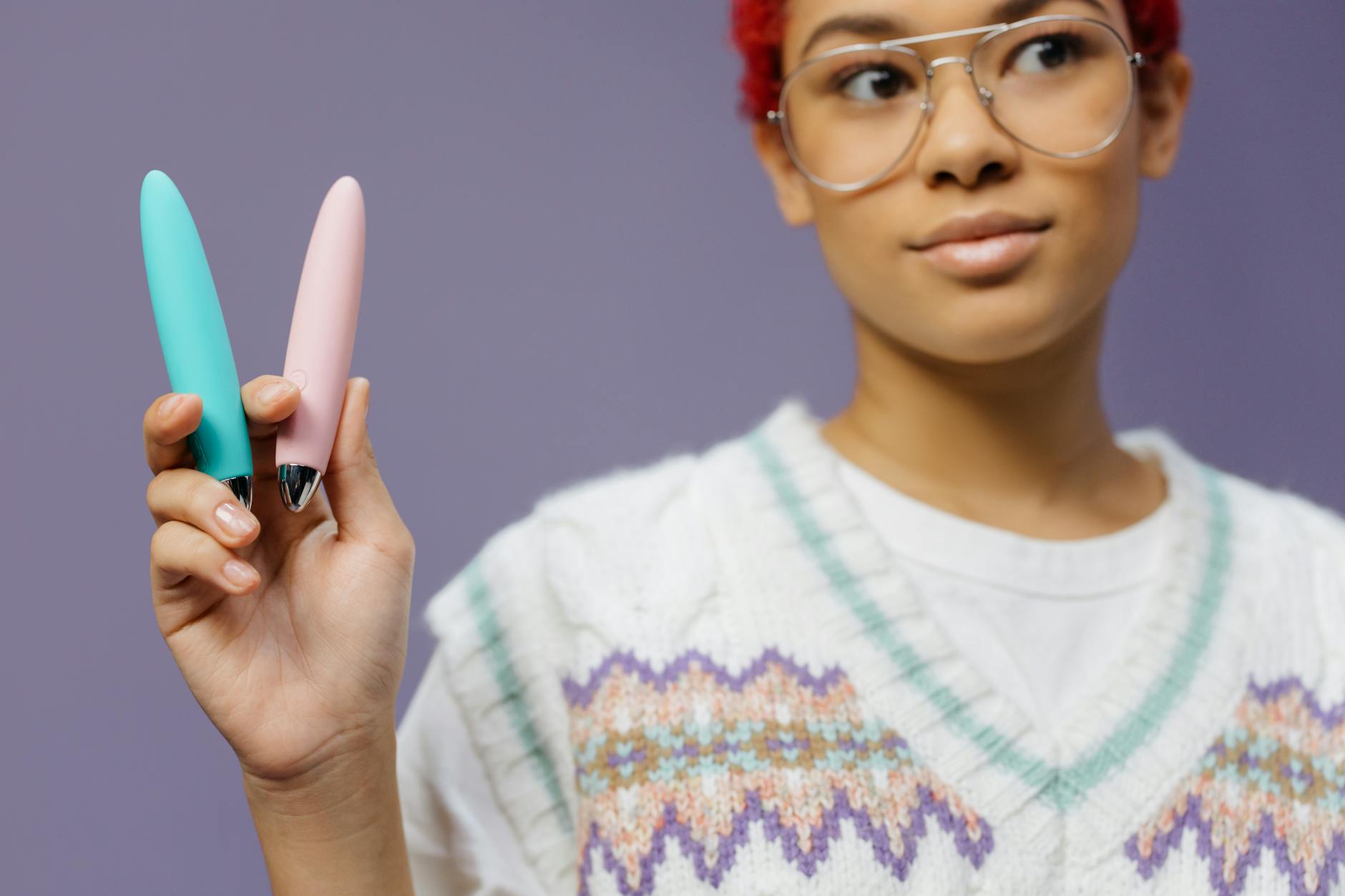
Let's name what's actually happening
You've spent months or years having sex with a partner. Your body learned a rhythm that wasn't yours. Your arousal became responsive rather than proactive. And now, when you're alone with your lemon vibrator or any clitoral vibrator, something feels off. Wrong even. Like you've forgotten how to want things by yourself.
This isn't dysfunction. It's the gap between partnered arousal and solo arousal, and it's wildly common.
Why solo play feels so different after partnered sex
Here's the neuroscience part without the jargon. When you have sex with a partner, your brain is partially occupied by external cues. Their breath, their responses, the dynamic between you. Your nervous system is co-regulated. You're not entirely responsible for the pleasure.
When you're alone, the entire feedback loop is yours. There's no external person to respond to, no one whose arousal you're tracking. Your brain suddenly has to do all the work. And if your brain is used to being 60% of the equation, solo suddenly feels like 100%, which feels like pressure, not pleasure.
Add to that a thread of guilt. Maybe you feel like solo play is a rejection of your partner, or a statement that they weren't enough. Or you feel self-conscious about what turns you on when no one's watching. Those thoughts don't kill arousal. They just crowd it out.
The reframing that actually helps
Solo play isn't a backup plan. It's not what you do when your partner isn't available. It's the home base. It's the source.
When you know your own pleasure deeply, partnered sex gets better. You know what you need. You can ask for it. You're not waiting for your partner to figure you out, and they're not carrying the burden of being your only source of arousal.
Lemon vibrators and other clitoral vibrators are particularly useful here because they take the pressure off your partner to provide the exact sensation your body needs. They let you explore on your terms.
How to start again when starting feels weird
Three foundational shifts:
1. Stop treating it like "maintenance." Solo pleasure isn't something you do because your partner is busy or because you should. It's exploration. You're learning your body like you're learning it for the first time. Because in some ways, you are. Solo arousal is different from partnered arousal.
2. Remove the endgame pressure. You don't have to have an orgasm. You don't have to finish. The goal is sensation, not outcome. Pick up your lemon vibrator with zero agenda. What does it feel like on different patterns? Which intensity makes you curious rather than overwhelmed? Spend 10 minutes just noticing. Not achieving.
3. Expect boredom and restlessness at first. Your body is used to external stimulation and external pacing. Solo play with lemon sexual toys or any vibrator asks you to hold attention on your own sensation. That's a skill. It takes practice. If you feel fidgety or your mind wanders, that's normal. Put the vibrator down. Come back tomorrow.
Building a solo ritual that actually works
The details matter here. Solo pleasure doesn't have to look like partnered sex, and it shouldn't.
Timing. Pick a time when you're not tired, not rushed, not thinking about three other things. Early morning works for some people. Post-shower works for others. The point is not when your partner is gone. It's when you have actual presence.
Space. You need to feel safe and private. Alone in your room. Door locked. Phone on silent. Solo play requires a different kind of vulnerability than partnered sex. You need to know no one is going to interrupt you mid-sensation.
Pacing. Don't start on intensity level 5 on your lemon clitoral vibrator. Start on level 1 or 2. Spend five minutes noticing how it feels. Then move to level 3. The point is to build sensation slowly, not to blast your nervous system into compliance. You're retraining your body to build arousal from rest, not from an external partner's momentum.
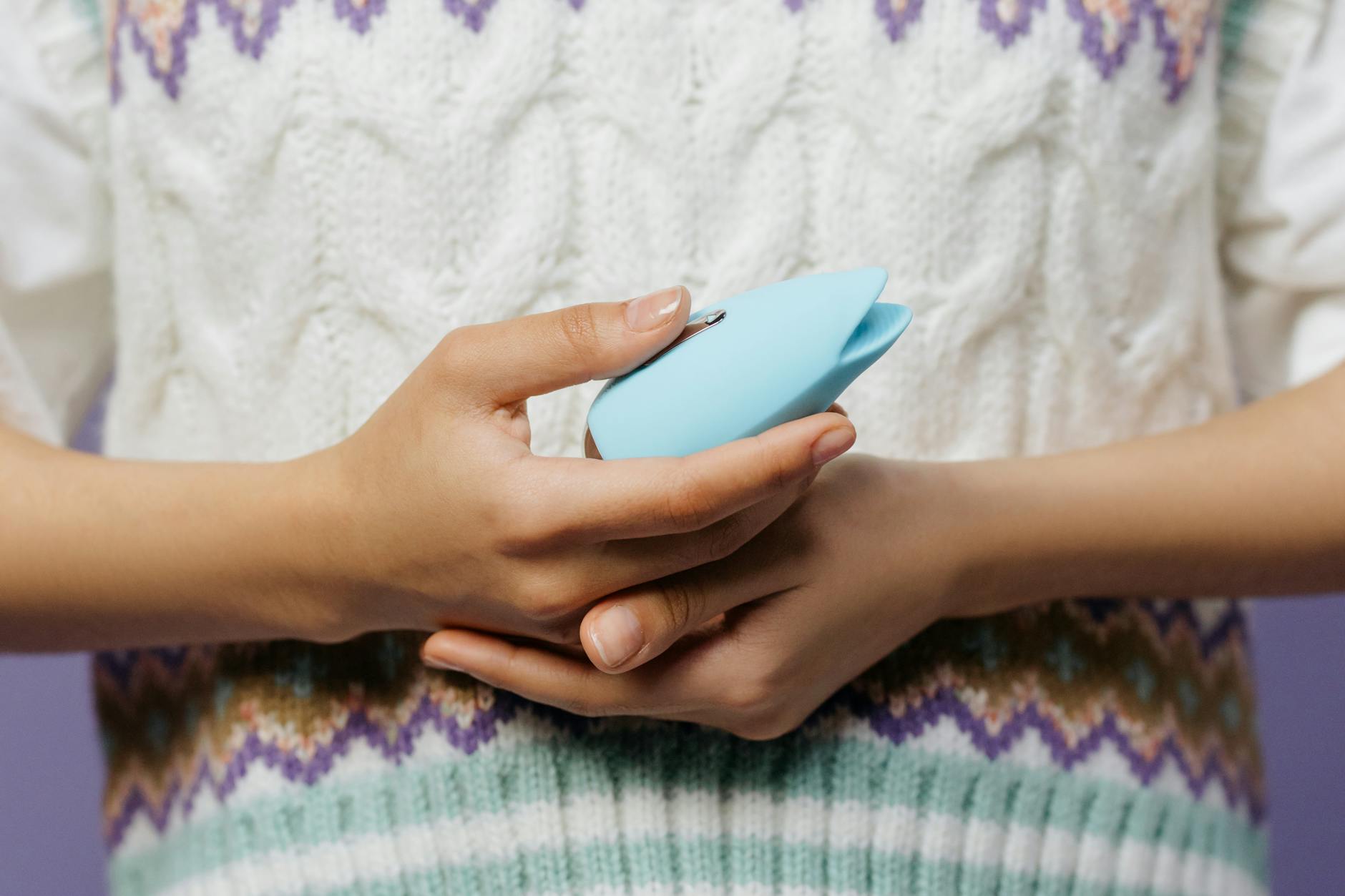
Photo by cottonbro studio on Pexels
The specific thing lemon vibrators do well for solo play
Clitoral vibrators like those from Lemon Intimacy use suction and pulse patterns rather than straight vibration. That matters for solo play because suction keeps consistent pressure without requiring you to hold the vibrator at a perfect angle. You can relax. You can breathe. The toy is doing the consistent work. Your job is to notice what your body is responding to.
When you're learning to reconnect with solo pleasure after partnered sex, that consistency is gold. You're not managing the mechanics. You're just receiving sensation. That's the opposite of the self-consciousness and performance pressure you might have felt before.
What to do if your partner feels threatened
This one comes up. A partner hears that you're exploring solo play and something in them feels rejected or concerned that you're getting pleasure without them.
Here's what I tell couples in my practice: solo pleasure and partnered pleasure feed each other. When you know what you want, you can guide your partner toward it. When your partner doesn't have to be your only source of arousal, the sex you do have together is based on connection, not obligation.
The conversation isn't "I need to explore solo" as a defense. It's "I want to know my body better so that when we're together, I can tell you what I actually want." That's not rejection. That's investment.
If your partner is still struggling with it, that might be worth exploring together. But it's not a reason to skip solo play. Your pleasure is non-negotiable.
The timeline is longer than you think
If you've been in a partnered dynamic for a long time, rebuilding solo arousal takes weeks or months, not days. You're not broken or delayed. You're recalibrating a nervous system that learned a different pattern.
Week one might be awkward. Week two you'll probably feel more present. By week four, you might notice that your own arousal is starting to feel natural again. By week eight, solo play might actually feel good in a way that partnered sex never quite did. That's not a judgment on your partner. It's just that solo play is yours. All of it. No compromise, no negotiation.
Your lemon adult toys are tools for that process. Use them without apology.
When to seek outside help
If after a few months of consistent solo exploration you still feel completely disconnected from your own arousal, or if there's deeper shame or trauma underneath, talking to a therapist who specializes in sexuality can shift things fast. That's not a sign of failure. That's you asking for the right tool.
Similarly, if solo play triggers anxiety or flashbacks to past relationships, don't push through it. Work with someone. Your pleasure deserves that level of care.
FAQ: Common questions about solo play after partnered sex
Does using lemon vibrators alone mean my partnered sex isn't satisfying?
No. They're completely different experiences. Solo play builds arousal from your own baseline. Partnered sex is about connection and co-regulation. Both are valuable. Most people with a healthy sex life do both.
Will my partner feel replaced by a vibrator?
Not if you frame it accurately. A clitoral vibrator isn't a replacement. It's a tool that gives you information about your own body that you can then bring to partnered sex. If your partner genuinely feels threatened, that's worth having a conversation about his or her own insecurity, not a reason to avoid solo pleasure.
How long should a solo session take?
Anywhere from 10 to 40 minutes. There's no right answer. Some people explore quickly. Others need a long, slow build. Solo play is the one place you don't have to sync up with anyone else's timeline. Go at your pace.
Is it okay to think about your partner during solo play?
Completely. You might fantasize about them, about someone else, about something entirely unrelated to real life. Your thoughts during solo play are yours alone. There's no wrong answer.
What if I can't orgasm solo but I can with my partner?
This happens frequently. Partnered sex has external cues and momentum that can trigger orgasm even without deep arousal. Solo play requires you to build that arousal yourself. That's a skill that takes practice. Try <a href="/blog/how-to-use-lemon-vibrators-when-you-need-extra-time-to-warm-up-physically">extending your warm-up time</a> and lowering performance expectations. Orgasm might come. It might not. Either way, the sensation matters.
Can I use lemon vibrators if I'm still partnered?
Absolutely. In fact, I recommend it. Solo exploration makes you a better partner because you know yourself. You're not guessing what you want. Your partner doesn't have to guess either. <a href="/blog/how-to-use-lemon-vibrators-when-you-and-your-partner-have-different-arousal-speeds">When partners have different arousal speeds</a>, solo play during foreplay can help you both get to the same place.
The bottom line
Solo pleasure after partnered sex feels awkward because you're learning a different kind of arousal. That's not pathology. That's normal nervous system recalibration. Lemon clitoral vibrators and adult toys from Lemon Intimacy make that transition easier because they provide consistent sensation while you relearn what your body wants when no one's watching.
You don't have to choose between solo play and partnered sex. You get both. And the more you understand your solo arousal, the better the partnered version becomes. Your pleasure is the foundation everything else is built on. Spend time with it. You deserve to know what you actually want.