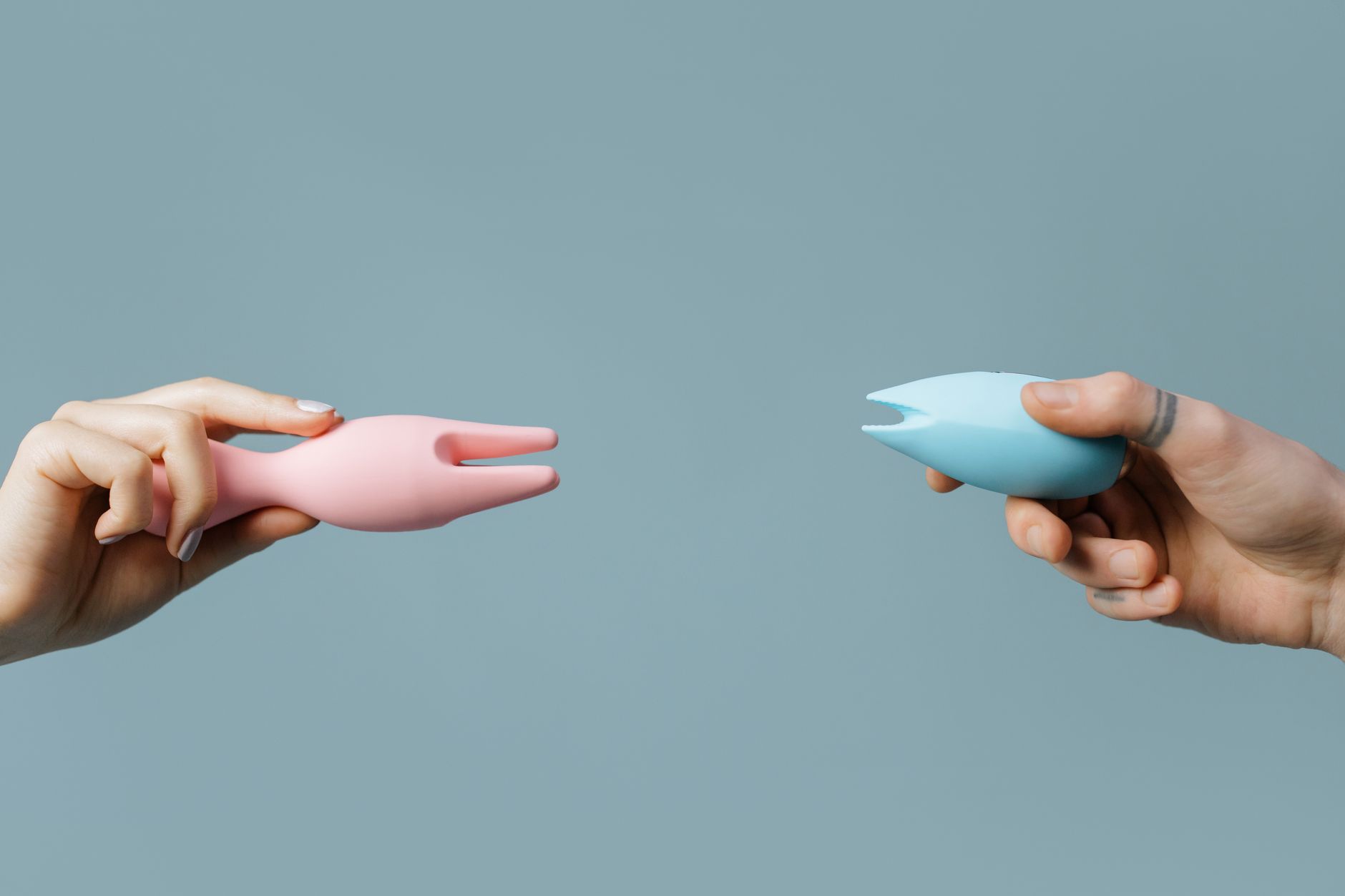
How to Use Lemon Vibrators When Sensation Feels Disconnected After Relationship Stress
Let's be real: when a relationship is under strain, your body checks out before your mind does. You might be physically present, but arousal feels miles away. The sensation that used to come naturally now requires a conscious effort to even access. You're not broken. Your nervous system is doing exactly what it's supposed to do when there's unresolved tension, unmet needs, or lingering anger in your relationship.
Here's what I see in my practice all the time: couples navigate a rough patch, things improve on the surface, but one or both partners still feel that numbness during sex. It's like someone dimmed the lights in your body and forgot to turn them back on. This is where lemon vibrators like the clitoral stimulator can become a powerful tool, not as a band-aid, but as a way to literally rewire your nervous system's response to pleasure.
The good news is that sensation can come back. Your body hasn't forgotten how to feel. It's just protecting you.
Why relationship stress physically shuts down arousal
When you're in conflict with a partner, your sympathetic nervous system stays activated. That's the fight-flight-freeze response. Arousal requires the opposite state. Your parasympathetic nervous system, the one that controls rest-and-digest functions, needs to be in charge for sexual pleasure to flow. If you're carrying unprocessed anger, hurt, or disconnection into the bedroom, your body won't switch gears.
This isn't psychological resistance. It's neurobiology. Your vagus nerve, which governs arousal, literally dims the signals to your genitals when your brain perceives threat or unsafe attachment.
What makes this worse is shame. You feel numb, you assume you should be able to just push through it, and then you feel broken for not being able to. That secondary shame layer actually keeps you stuck longer.
The specific way stress numbs sensation
Three things happen simultaneously when relationship stress is present:
Blood flow pulls inward. During conflict, blood concentrates in your core to prepare for survival. Your genitals become less engorged, less sensitive. Touch that would normally feel electric feels dull.
Cortisol stays elevated. Stress hormones compete with dopamine and oxytocin, the neurochemicals that fuel arousal and connection. Even when the conflict passes, cortisol can stay high for days if the underlying rupture hasn't been addressed.
The arousal threshold rises dramatically. It's not that you can't feel pleasure. It's that the stimulus required to trigger it becomes much stronger. Gentle touch does nothing. You need intensity just to register sensation.
This is also why many people in strained relationships swing toward extremes. They reach for either total avoidance of sex or intense, almost numbing sex. Both are nervous system protection mechanisms.
Why lemon clitoral vibrators help reset your arousal response
Clitoral vibrators work differently than your partner's touch does in this scenario, and that's precisely why they're useful here.
When your nervous system is dysregulated, direct stimulation from a partner can feel emotionally loaded. It carries the weight of the relationship tension. A lemon vibrator, by contrast, is neurologically neutral. It doesn't carry the charge of unresolved conflict. Your brain can process it as sensation without processing it as intimacy trouble.
Second, the consistent rhythm and intensity of a clitoral vibrator bypasses the need for arousal to build gradually. You're not waiting for your body to cooperate with your partner's presence. You're giving your nervous system a clear, unambiguous signal. The vibration says yes, directly to your clitoral nerves, with no relationship history attached.
Third, using a lemon vibrator solo during this phase lets you rebuild trust in your own arousal without the pressure of performance or connection concerns. You're not trying to orgasm for anyone. You're just exploring whether sensation can come back.
Many of my clients report that solo pleasure with a lemon vibrator becomes the gateway back to partnered pleasure. Once they've rewired the arousal response alone, they can eventually bring that knowledge back to their relationship.
How to start: the nervous system reset protocol
Before you use a lemon vibrator, the foundation matters.
First, name what happened. You don't need to solve the relationship issue yet. You just need to acknowledge it internally or with your partner: "We've been in rough waters. My body has protected itself by numbing down. I want to rebuild my own arousal separate from us right now." This removes shame and creates permission.
Second, create physical safety. You can't rebuild arousal in an unsafe space. If the relationship tension is still actively happening, if there's unresolved anger or contempt, trying to use a vibrator won't work. Your nervous system will stay guarded. Sometimes the therapeutic step is couples counseling or a difficult conversation before pleasure work begins. That's not avoidance. That's wisdom.
Third, pick your setting deliberately. Not the bedroom where conflict happened. Not a space where you're multitasking or distracted. Pick a private space where your body can safely downshift into rest mode. Warm water helps. Soft light. Your phone on silent.
The graduated intensity approach
When you're numb, the temptation is to go straight to the strongest setting on your lemon vibrator. Resist that.
Start at pattern 1 or 2. Yes, you might feel almost nothing. That's expected. Your goal right now isn't orgasm. It's to send your nervous system a new message: "Sensation can be safe again."
Spend 3-5 minutes at a low intensity, just noticing. Not achieving. Noticing whether sensation is present, whether warmth builds, whether anything shifts.
Then move to pattern 3. Spend 3-5 minutes there. Build slowly across 2-3 sessions before moving to higher intensities.
This gradual exposure helps your nervous system recognize that pleasure isn't dangerous. It's not connected to the conflict. It's just sensation.
Solo pleasure as a bridge, not a destination
Here's what I want to be clear about: using lemon sexual toys solo during relationship stress isn't a replacement for fixing the relationship. It's a reset.
As sensation comes back and your nervous system starts to downregulate, you can have a conversation with your partner about rebuilding physical connection. Not sex. Connection. Nonsexual touch, presence, the things that rebuild safe attachment.
Once you've rebuilt sensation in your own body, you can test whether that sensation stays online with your partner present. Often it does. Sometimes it doesn't right away, and that's useful information that the relationship rupture needs more repair work before you're ready.
But you won't know until you've reset your own nervous system first.
What to watch for: signs you're ready to reconnect with a partner
You know you're moving toward readiness when three things are true.
First, you can access arousal solo without effort. Not effortlessly, but without fighting your own body. Sensation is coming back.
Second, the relationship has stabilized. That doesn't mean perfect. It means you and your partner have had the hard conversations or are actively in therapy. There's a sense of movement toward reconnection, not ongoing conflict.
Third, you can be physically present with your partner without your nervous system immediately signaling danger. You don't have to feel aroused yet. You just need to not feel unsafe.
When those three things align, you can begin to integrate what you've learned about your own arousal into partnered sex.
Common mistakes I see
People often try to skip the solo pleasure phase and jump straight back into partnered sex to prove the relationship is fine. It's understandable. It feels like the fix. But it usually doesn't work because the nervous system's wisdom hasn't been honored.
Another common mistake: using a vibrator as a substitute for the relationship repair work. A lemon clitoral vibrator is a tool for resetting sensation. It's not a solution to communication breakdown or ongoing conflict.
A third: expecting arousal to feel the same as it did before the stress. It won't. It might feel different, deeper, more grounded, once it comes back. That's not worse. It's just different.
When to bring your partner into the process
If you're in a committed relationship, at some point your partner needs to know what's happening. Not in the service of pressuring you back into sex. In the service of them understanding why you've stepped back and what you're doing about it.
You might say something like: "I've noticed my body checked out during our rough patch. I'm working on reconnecting with my own arousal separately. Once I've done that, I'd like us to rebuild touch together, but I need to trust my own body first."
A partner who loves you will understand. A partner who doesn't want to wait or help in that process is giving you important information about the relationship itself.
The role of lemon vibrators in long-term relationship resilience
Here's something that surprises people: couples who have strong individual pleasure practices tend to have more resilient relationships.
Why? Because you're not dependent on your partner to feel alive in your body. When conflict comes, and it always does, you have a way to stay connected to yourself. That self-connection is what makes you able to repair conflict instead of getting stuck in it.
Using lemon adult toys isn't a sign your relationship is in trouble. It's a sign you're taking your nervous system seriously. You're willing to do the work of staying aroused, staying alive, even when things are hard.
People also ask
How long does it take for sensation to come back after relationship stress?
This varies. For some people, sensation returns within a few weeks of solo work with a vibrator, especially if the relationship stressor is resolving. For others, it takes 2-3 months. The timeline depends on how long the stress lasted and how deep the nervous system protection went. If sensation hasn't returned after three months of consistent solo pleasure practice, it's worth talking to a therapist or doctor, because something else might be at play.
Can I use a lemon vibrator while my relationship is still in crisis?
You can try, but your nervous system likely won't cooperate fully. If you're still in active conflict, still feeling unsafe or disconnected from your partner, pleasure work often feels futile. The deeper work is addressing the relationship rupture first. That might mean a difficult conversation, couples therapy, or a period of separation. Once the acute crisis passes, the nervous system reset work becomes more effective.
Should I hide the vibrator from my partner if we're trying to rebuild intimacy?
Not necessarily. Depending on your relationship, transparency about what you're doing and why can actually deepen trust. You might say: "I'm using this to reconnect with my body. Eventually, I'd like to bring that reconnection back to us." Some partners find that reassuring. Some find it triggering. The response you get tells you something important about whether this relationship can hold your full self.
What if my partner feels threatened by me using a clitoral vibrator?
That's worth exploring together. Sometimes partners feel threatened because they interpret it as a criticism of their touch or skill. Sometimes it's insecurity. Sometimes it's rooted in their own conditioning about sexuality. A conversation might sound like: "This isn't about you being inadequate. This is about me needing to reset my own nervous system after stress. I want to feel alive in my body again." If your partner can't support that, that's relationship information you need.
Is it normal to prefer the vibrator to partnered sex while I'm healing?
Completely normal. Your nervous system feels safer with the vibrator because it's not carrying relationship conflict. Over time, as the relationship stabilizes and you rebuild trust, that preference typically shifts. But if it doesn't, that's also information worth paying attention to. It might mean deeper repair is needed, or it might mean your sexuality simply has a solo component.
How do I know when I'm ready to have sex with my partner again?
You're ready when you can access arousal in your own body and when the relationship rupture has been addressed enough that you feel a sense of safety and movement toward reconnection. You don't have to feel fully healed. You just need to feel like you're both trying. The sex itself becomes part of the repair, a way of saying "I'm choosing you again." But that works only if there's genuine reconnection happening outside the bedroom too.
Relationship stress is one of the most powerful pleasure killers there is, and it's also one that many people suffer in silence about. You think you should just be able to switch back on once the conflict passes. But your nervous system doesn't work that way. It needs deliberate, patient reset work.
A lemon vibrator gives you a tool to do that work on your own terms, in your own body, with no performance pressure. Use it as that tool. Then, when you're ready, bring what you've learned back to your relationship. That's where the real healing happens.
If you're navigating relationship stress and want to talk through what's next, reach out to us. We're here to help you rebuild.