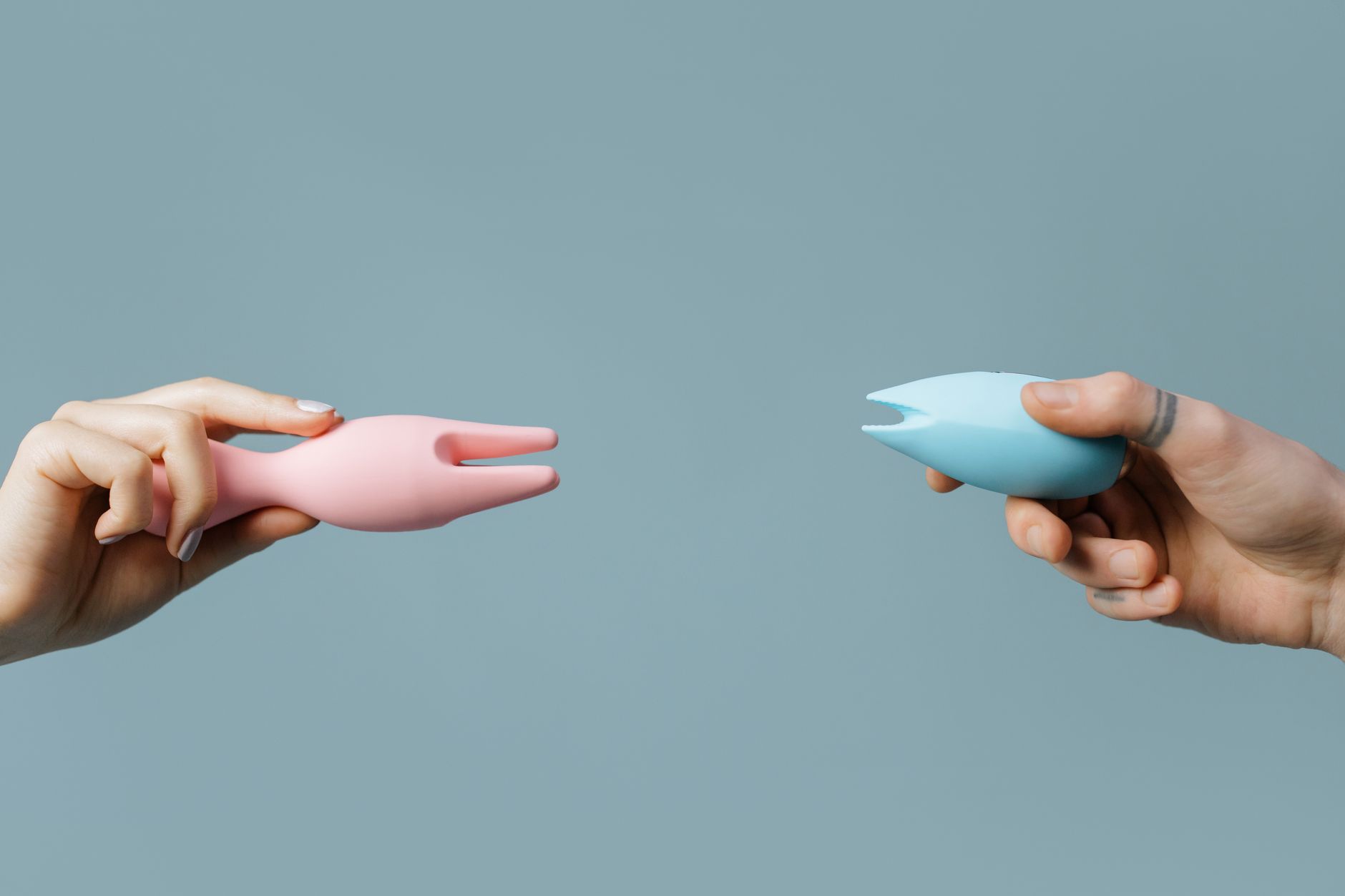
When relationship distance shows up as physical numbness
Let's be real. You can feel emotionally disconnected from your partner and simultaneously experience that disconnection as a physical wall. Your body stops responding the way it used to. Touch that once felt electric now feels like nothing. Orgasms that arrived easily now feel impossible to reach. And the worst part? You're not sure if it's about your relationship or if something's wrong with you.
It's probably both. And neither is permanent.
Relationship changes rewire arousal pathways. When you're carrying anger, resentment, or even just emotional fatigue from a partnership shift, your nervous system downregulates. Your brain deprioritizes pleasure signals because it's too busy managing the hurt. This isn't a character flaw or a sign of dwindling desire. It's a rational nervous system response to an unstable emotional environment.
The good news? Your own touch—and tools like lemon vibrators—can bypass that stuck place entirely. When you rebuild pleasure on your own terms first, reconnection with a partner becomes possible again. Not forced. Not performative. Actually real.
The difference between partner-disconnection and arousal-disconnection
Here's what I see in my practice: people sometimes conflate the two and assume they have to solve the relationship crisis before they can restore sensation. Wrong order.
Emotional disconnection from a partner doesn't necessarily mean your body has forgotten how to feel pleasure. It means your body has learned not to be available for pleasure with that person right now. That's actually a healthy boundary your nervous system is enforcing. But it can spill over into all arousal, including solo pleasure, because your brain doesn't compartmentalize as neatly as we'd like.
What lemon vibrators do is create a separate pleasure circuit. They interrupt the loop of "I can't get turned on because things are strained" by offering a new stimulus pattern that doesn't carry the emotional weight. You're not trying to force arousal with a partner who feels unsafe or distant right now. You're recalibrating what your body is capable of when the pressure is completely gone.
Why lemon vibrators work when everything else feels flat
Three reasons:
First, they offer novelty without novelty-stress. A new sensation pattern—especially suction-based stimulation from a lemon clitoral vibrator—reaches nerve endings in a way your usual touch doesn't. Your brain lights up around new stimuli. That neurological novelty can jolt sensation awake when you've been numb for months.
Second, they're entirely under your control. When you're rebuilding after emotional distance, control matters. You set the intensity, the rhythm, the pacing. There's zero negotiation, zero performance pressure. Many people find that control alone makes arousal accessible again.
Third, they work on the physics level, independent of psychology. You don't have to be "in the mood" for a lemon vibrator to trigger the physiological cascade. The sensation itself sometimes generates arousal retroactively. Your body starts responding, and your mind catches up.
The setup that actually works
If you're rebuilding from emotional distance, here's the non-negotiable foundation:
Privacy and time. Not a stolen 10 minutes while your partner's in the shower. Real time. An hour minimum, once weekly, where you're not going to be interrupted. This isn't selfish. It's the opposite. It's you communicating to your nervous system that your pleasure is important enough to protect. Your body will only believe that if you act like you mean it.
Zero performance metrics. Orgasm is not the goal. Sensation is. You might not come. You might come three times. You might feel absolutely nothing the first session and slight warmth the second. All of this is progress. The moment you add pressure to this work, you recreate the conditions that made you numb in the first place.
Water-based lubrication. When you've been emotionally disconnected, your natural lubrication often drops. Not because you don't want to touch yourself, but because your sympathetic nervous system is still partially activated. Lube solves that immediately and removes friction that can feel uncomfortable on already-sensitive tissue. It also gives you permission to add something external without it feeling like failure.
The actual technique that rebuilds sensation
Start on the lowest intensity. Not because you're broken, but because lower intensity lets you feel micro-sensations you'd miss at full power. Your goal in the first 2-3 sessions is just to map what you feel.
Begin with the lemon vibrator on your thighs, your lower belly, anywhere except the clitoris. Spend 3-5 minutes just noticing texture and sensation. What feels warm? Tingly? Numb? Where does your attention actually go? This primes your nervous system without demanding immediate clitoral response.
Then move to the outer labia. Again, not rushing. Let yourself feel the difference between the outside edges and the inner folds. This takes maybe 5 minutes, and it's doing crucial remapping work. Your brain is relearning that touch = pleasure signal is safe again.
Only then move to the clitoris, and start at the edges rather than direct contact. Many people rebuilding from emotional distance are shocked by how sensitive the clitoris itself feels when they've been numb for a while. It's not pain, exactly. It's like oversensitivity after a nerve has been dormant. Starting indirect gives you control to build intensity gradually.
If nothing happens in the first 20 minutes, that's fine. Stop. Your body got input that pleasure is back on the agenda. That matters more than immediate results.
What to do if pleasure is too intense (the other extreme)
Sometimes people rebuilding from relationship distance experience the opposite problem: sensation feels overwhelming or almost painful. This happens when your nervous system is still in protective mode and suddenly gets flooded with input. It's also normal.
Reduce intensity immediately. If you're using a lemon clitoral vibrator, drop to pattern 1 or 2. If that's still too much, use the vibrator through underwear or a thin fabric for the first few sessions. This mutes the sensation without removing it entirely. Your nervous system gets to slowly habituate to pleasure being available again without feeling ambushed.
And here's the thing people miss: if pleasure feels too intense, that's information. It often means you're not actually ready for partnered sex yet, even if your relationship has improved. Stay with solo work. Your body is telling you it still needs time to feel safe receiving sensation from another person.
When to bring it back to your partner (and how)
You don't have to choose between rebuilding solo pleasure and rebuilding partnered pleasure. But timing matters. Once you've had maybe 5-10 sessions where you felt something—not necessarily orgasm, just genuine sensation—you can introduce your partner to this process if they're willing.
The framework: your partner is present but not the focus. They might be reading or simply nearby. The presence itself, if it feels safe, helps rewire the association between "partner close" and "pleasure available." You're not asking them to do anything. You're just rebuilding the neural pathway in a low-pressure environment.
Only when you can reliably access sensation alone, with your partner present, should you move toward partnered touch. And even then, lemon vibrators can stay in the rotation. They're not a replacement for your partner's touch. They're a way to ensure your nervous system stays calibrated to pleasure, regardless of what's happening in the relationship.
The honest truth about timing
If your relationship is in active crisis—ongoing infidelity, unresolved conflict, emotional withdrawal from a partner who isn't willing to engage—rebuilding pleasure isn't going to fix the relationship. Sometimes rebuilding pleasure helps you see clearly that the relationship isn't working. That's okay. That's useful information.
But if you're in the middle stage. If things are strained but you're both trying to reconnect. If the emotional distance is healing but physical reconnection hasn't followed yet. That's where this work shines. Lemon vibrators become a bridge. They prove to your body that pleasure is still possible while your relationship relationship finds its footing again.
The timeline isn't standard. Some people feel sensation return in three weeks. Others take three months. Your nervous system doesn't care about logic or timeline. It cares about safety. Every small sensation you feel, every moment you prioritize your own pleasure without guilt, sends the signal that safety is returning. Eventually, your body believes it.
FAQ: Rebuilding pleasure after relationship distance
Does using a vibrator while your relationship is strained mean you should break up?
Absolutely not. Solo pleasure and partnered intimacy are separate systems. Using a lemon vibrator to rebuild sensation is self-care, not infidelity or disloyalty. In fact, many couples find that one partner rebuilding their own arousal helps both of them. When you stop being numb, you become available for actual intimacy instead of performing numbness.
Can your partner tell if you're using a vibrator, and is that a conversation you need to have?
That depends entirely on your relationship and how you've historically discussed sexuality. Some couples integrate vibrators into their shared pleasure without awkwardness. Others prefer privacy around solo work. There's no universal right answer. What matters is your own comfort. If secrecy around this feels like shame, that's worth examining. If privacy around solo pleasure feels protective and boundaried, that's fine too.
If your partner isn't interested in rebuilding intimacy, does solo pleasure work still help?
Yes, but it shifts purpose. If your partner isn't willing to engage in reconnection work, you're not rebuilding toward partnered pleasure. You're rebuilding toward self-sufficiency and resilience. Lemon vibrators still matter in that context. They remind you that your body is still capable of feeling good, regardless of what's happening in your relationship. That's actually crucial clarity.
How do you know if numbness is permanent or if it's just the current relationship distance?
Time and consistency tell you. If you're using lemon vibrators consistently, in a low-pressure way, and you feel zero sensation shift over 8-10 weeks, that's different from numbness that's improving gradually. The absence of any change might mean your nervous system needs professional support, or it might mean the relationship situation itself is still too unstable for your body to relax. Both are useful information.
What if rebuilding pleasure feels triggering or brings up trauma?
Stop immediately and reach out to a trauma-informed therapist. Relationship distance sometimes sits on top of older wounds—previous infidelity, assault, abandonment. If pleasure-rebuilding surfaces those, you need professional support before continuing solo work. This isn't a personal failure. It's your body telling you something needs attention beyond what a vibrator can address.
Can lemon vibrators help if you've lost desire for your partner specifically but not for sex in general?
Yes. This is actually the most common scenario. You might still feel aroused by other contexts or even fantasies, but the person in front of you doesn't trigger anything. That's not numbness. That's loss of attraction or safety within that specific dynamic. Lemon vibrators can help you understand what does still turn you on. That information helps you decide whether the relationship is worth rebuilding or whether it's simply run its course.
Moving forward
Rebuildingpleasure after relationship distance isn't linear. You'll have sessions where sensation feels abundant and sessions where you feel nothing again. Both are normal. What matters is showing up for yourself consistently, without judgment, and trusting that your body's capacity for pleasure is still there—even when the relationship itself feels uncertain right now.
Lemon vibrators are a tool, not a cure. But they're a remarkably effective tool for reminding your nervous system that pleasure is safe to feel again. And sometimes, that reminder is exactly what both you and your relationship need to move forward.