
Let's start with the script you didn't write
Most sex education assumes penetration is the destination. Foreplay leads there. Arousal builds toward it. Even orgasm is often framed as the final stop after penetration. So if penetration isn't happening, if it never happens, or if it stopped happening partway through your life, there's a weird silence. No roadmap. No permission to say that's fine.
Here's the thing: clitoral pleasure is not a warm-up act. It's the headliner. And once you stop treating it like the opening band, everything changes.
Why penetration-free pleasure is already common (and underreported)
Data is genuinely hard to find here because the research questions are framed around dysfunction. But we know from large surveys that roughly 40 to 50 percent of people with vulvas either rarely reach orgasm from penetration alone, or never do. Add in people who find penetration uncomfortable, dysphoric, or just uninteresting, and you're looking at a significant chunk of the population whose actual pleasure pattern doesn't match the default script.
The difference between knowing that statistically and actually building your sex life around it is huge. Most people spend years assuming they're the exception, the broken one, the person with a problem to solve. Then one day something shifts. Maybe a partner changes their stance on what sex can look like. Maybe you get tired of performing someone else's idea of what should feel good. Maybe a health issue makes penetration impossible, and you realize, surprisingly, that you don't actually miss it.
When that happens, lemon vibrators stop being supplementary and become central.
The clitoral anatomy that nobody explains
Here's why external stimulation works so well: the clitoris has roughly 8,000 nerve endings packed into a space the size of a pea on the outside. The internal branches extend up into the body, but the external tip is where the density is highest. That's not a design flaw. That's a design that prioritizes sensation.
Most vibrators work through repetitive pressure or vibration, which triggers those nerves. But lemon clitoral vibrators use suction. They create a gentle rhythmic pulling sensation that feels different from anything you'd get from friction alone. The stimulation reaches deeper nerve pathways without the potential for irritation that repetitive contact can sometimes cause.
When penetration isn't in the equation, that external stimulation becomes the entire sensory experience. It's not competing with anything else. You can dial the intensity, the pattern, the duration all the way you want it because there's no negotiation happening with someone else's body.
Building a pleasure routine around clitoral focus
Four practical shifts that matter:
1. Time and space are yours alone. If you're partnered, this is the conversation: penetration-free sex is not a compromise. It's a choice. Your partner doesn't get to make this about themselves. If they're present, they're present in a supporting role. The spotlight is on your body and what you want. That mental clarity alone changes everything.
2. Warm-up happens differently. Without the buildup toward penetration, you can think of arousal as its own arc. You might start slow on a lower setting with your lemon vibrator, let sensation build, maybe pull back, then go deeper. No rush to a finish line. Some of my clients find their best orgasms come from long, slow sessions where they're just exploring what each pattern on the device does to their body.
3. Positioning is about comfort, not accommodation. You can lie however feels good. You can move however you want. You're not managing someone else's anatomy. Lean into that.
4. Lube still matters, even though there's no penetration. Water-based lubricant makes the suction sensation feel smoother and more consistent. It also keeps the skin from getting irritated if you're going for a longer session. It's a small thing that makes the whole experience better.
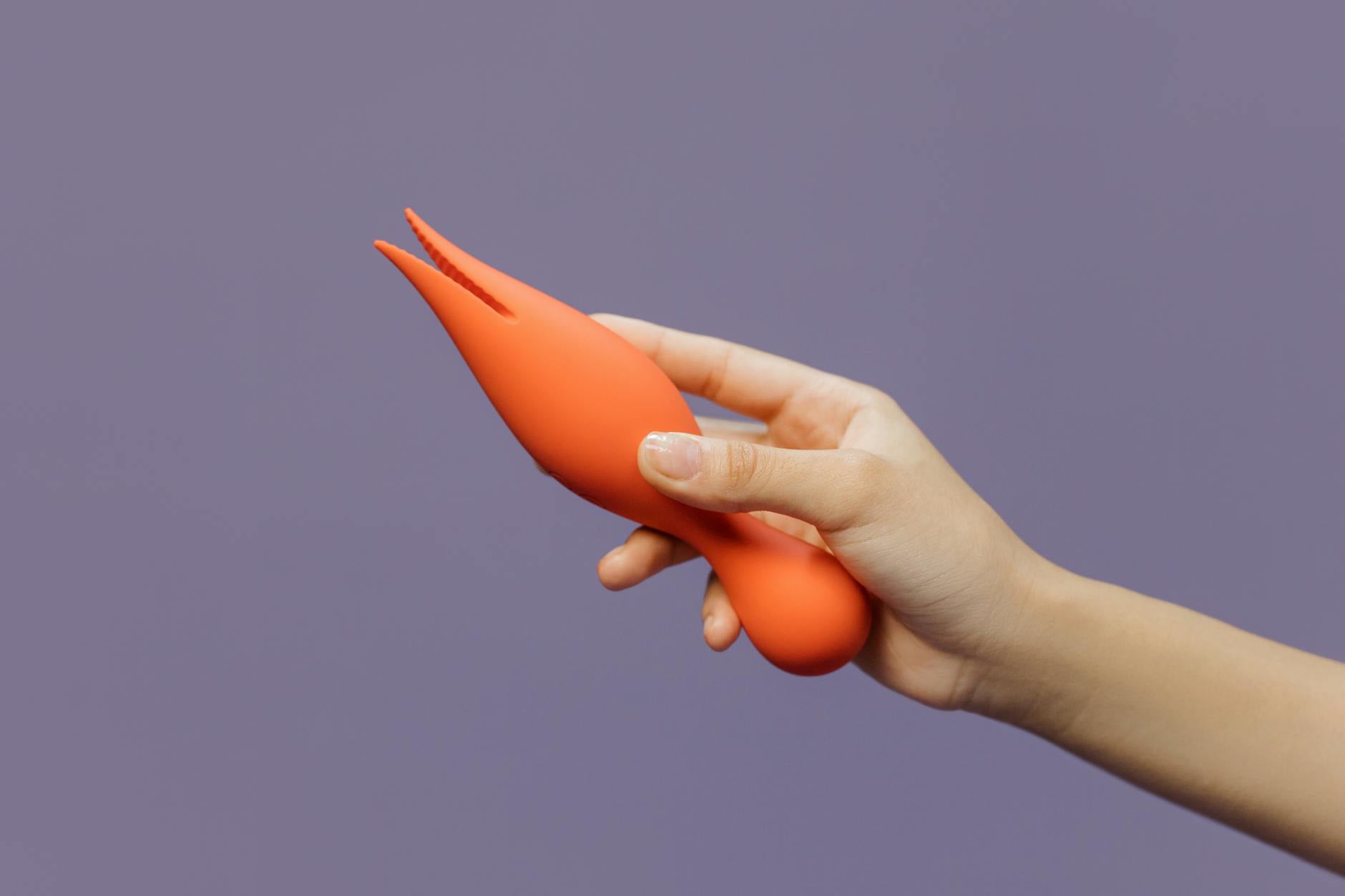
Photo by cottonbro studio on Pexels
When you're partnered and navigating this together
If your partner was expecting penetration and you're not interested in it, this is actually a relationship conversation, not a sex problem. Here's what I see happen: people frame it as "I can't" when the real thing is "I don't want to." Those need different approaches.
If penetration is physically uncomfortable or impossible, that's medical and logistical. You might explore lemon adult toys as an alternative that works for both bodies.
If it's more about preference (you've never been interested, or your interest changed), the conversation is different. It's not about finding a workaround. It's about your partner understanding that your pleasure matters more than penetration. That their access to penetration is not your responsibility. And that partnered sex can absolutely be full, satisfying, and intimate without it.
One shape this takes: you use a lemon clitoral vibrator while your partner watches, or while they touch you in other ways, or while you're in the same room with them also engaged in their own pleasure. You might combine clitoral stimulation with oral sex, with hand contact, with sensation play. The point is that penetration isn't the event anymore.
Some partners take this in stride immediately. Others need time to rewire their own expectations. That's fair. But the boundary is non-negotiable.
The sensations people report discovering
When I work with people building a sex life entirely around clitoral focus, patterns emerge.
Orgasms often feel more intense. Without the mental load of managing someone else's pleasure or comfort, without waiting for them to be ready, without the pressure to perform arousal you're not feeling, something unclenches. People describe orgasms that feel fuller, longer, sometimes multiple in one session.
The pleasure becomes more exploratory. There's less urgency. No finish line. People report spending 20 to 40 minutes just feeling what different patterns do, noticing where on the vulva different sensations register, experimenting with pressure and rhythm in ways penetrative sex doesn't really allow.
Anxiety sometimes drops. If you've been faking it during penetration, if you've been waiting for it to be over, if you've been managing someone else's feelings about your body, removing that dynamic can be revelatory. The head space clears.
Troubleshooting the most common friction points
If sensation feels muted at first, you might be holding tension. Pelvic floor tension is common, especially if you've spent years managing your body for someone else's benefit. Try some gentle relaxation work. Not Kegels (those tighten). The opposite. Breathwork. Letting the pelvic floor actually release.
If a lemon vibrator feels too intense, you're probably starting too high. Every device has a pattern 1, 2, 3 progression. Begin at 1. Stay there until sensation feels good. Build from there. Intensity is a choice, not a requirement.
If your partner feels rejected, this is a feelings conversation, not a sex conversation. Their insecurity about not being the one providing your pleasure is real, but it's theirs to work through. You're not responsible for fixing their relationship to your clitoris. A skilled couples therapist can help with this one.
If you feel weirdly guilty, that's worth examining. Where did the guilt come from? Someone told you penetration was the "real" thing. Someone made you feel like preferring external stimulation meant something was wrong with you. That's a belief to question, not a fact to accept.
The conversation with your body
Honestly, I think the biggest shift for most people is internal. You're essentially saying: my pleasure is the point. Not compromise, not accommodation, not someone else's preference. Mine. That requires you to actually know what your pleasure looks like.
Some people know immediately. Others need to explore. Use your lemon vibrator as a tool for figuring that out. What pattern makes your breath catch. What intensity makes you want more. What rhythm gets you there fastest. What slows you down in a good way. What feels almost uncomfortable until your body adjusts and then feels incredible.
That's not selfish. That's you being honest about your own body. And from there, everything else in your sex life can actually be built on something real instead of something you thought you were supposed to want.
Questions people actually ask
Can I use a lemon vibrator during partnered sex even if penetration isn't happening?
Completely yes. Your partner can use it on you. You can use it on yourself while they touch you elsewhere. You can be in the same room with them handling their own pleasure while you handle yours. The architecture is totally flexible. What matters is that everyone's actually interested in what's happening.
Do I need to use lube with a lemon clitoral vibrator?
Not strictly required, but it makes the experience smoother and more comfortable, especially if you're going for longer sessions. Water-based lube is ideal because it won't damage the silicone. A small amount goes a long way.
Is there something wrong with me if I don't enjoy penetration?
No. Nothing. You're in good company. Roughly half the population with vulvas experience little to no orgasm from penetration alone. Some people never want it. Some people want it sometimes. Some people wanted it for years and then didn't anymore. All of those are normal. The only "wrong" thing would be forcing yourself into a sex life that doesn't match what actually feels good to you.
What if my partner really wants penetration but I don't?
That's a compatibility conversation. Some couples find a middle ground that works for both people. Some decide this is a dealbreaker. Both of those are legitimate outcomes. The key is that you're not pressured into your own body as a compromise. If you do choose to include penetration sometimes, that's a separate choice from building your primary pleasure around clitoral stimulation.
How do I know if I'm avoiding penetration because of trauma versus genuine preference?
This is where a trauma-informed therapist becomes invaluable. Avoidance rooted in anxiety or past experience has a different feel than straightforward preference, but they can overlap in confusing ways. A good therapist can help you untangle that. In the meantime, a lemon vibrator gives you a way to explore pleasure that doesn't require penetration, so you can take your time figuring out what's real for you.
Can clitoral stimulation alone feel as satisfying as penetration plus clitoral stimulation?
For most people, yes. For some, it feels even more satisfying because there's no competing sensation, no negotiation, no distraction. Everyone's different. But the blanket answer is that clitoral focus creates full, legitimate, deeply satisfying sexual experiences. It's not less than. It's different, and for many people, it's better.
The permission you actually need
Lemon vibrators work best when you stop apologizing for what you want. When you're not treating external-only pleasure as a consolation prize or a workaround. When you're clear that this is the thing. Not the foreplay. Not the warm-up. The main event.
Once you get there, you might find that your pleasure expands in ways you didn't expect. That your body responds in new ways. That sex becomes something you actually want to do, instead of something you're supposed to do. That's the real shift. And it starts with one honest conversation with yourself about what you actually want, and what you're willing to ask for.
If you're ready to explore what works for your body, <a href="/contact">get in touch</a>. We're here to help you build a sex life that actually matches who you are.