
The thing nobody warns you about
You'll have sex again. You'll want to. And then something shifts. It's not that you stop loving your partner. It's that desire gets buried under a specific kind of exhaustion that sleep doesn't fix. You're touched out. Your body feels borrowed. Sex starts to feel like one more thing you're supposed to do instead of something you want to do. This is the invisible crisis of modern parenthood, and it's rarely about the sex itself.
Lemon Intimacy clitoral vibrators don't fix parenthood. But they do something quieter and more useful: they make it possible to rebuild pleasure without adding pressure.
What actually happens to desire after kids
Your brain chemistry genuinely changes. Oxytocin floods your system when you hold your baby, creating the same bonding mechanism that sex used to trigger. Your cortisol stays elevated because you're in a chronic low-level state of alert. Your dopamine system becomes rewired around immediate necessities (feeding, soothing, safety) instead of deferred pleasure. And yes, you're tired. Not "I had a bad night" tired. Bone-level tired that accumulates over years.
This isn't relationship failure. This is neurobiology.
But here's what matters: none of those changes are permanent. They're situational. And couples who make space for pleasure, even small space, recover faster and with more genuine connection than couples who wait until they have "more time." They don't. Time with young kids doesn't open up. You have to protect it.
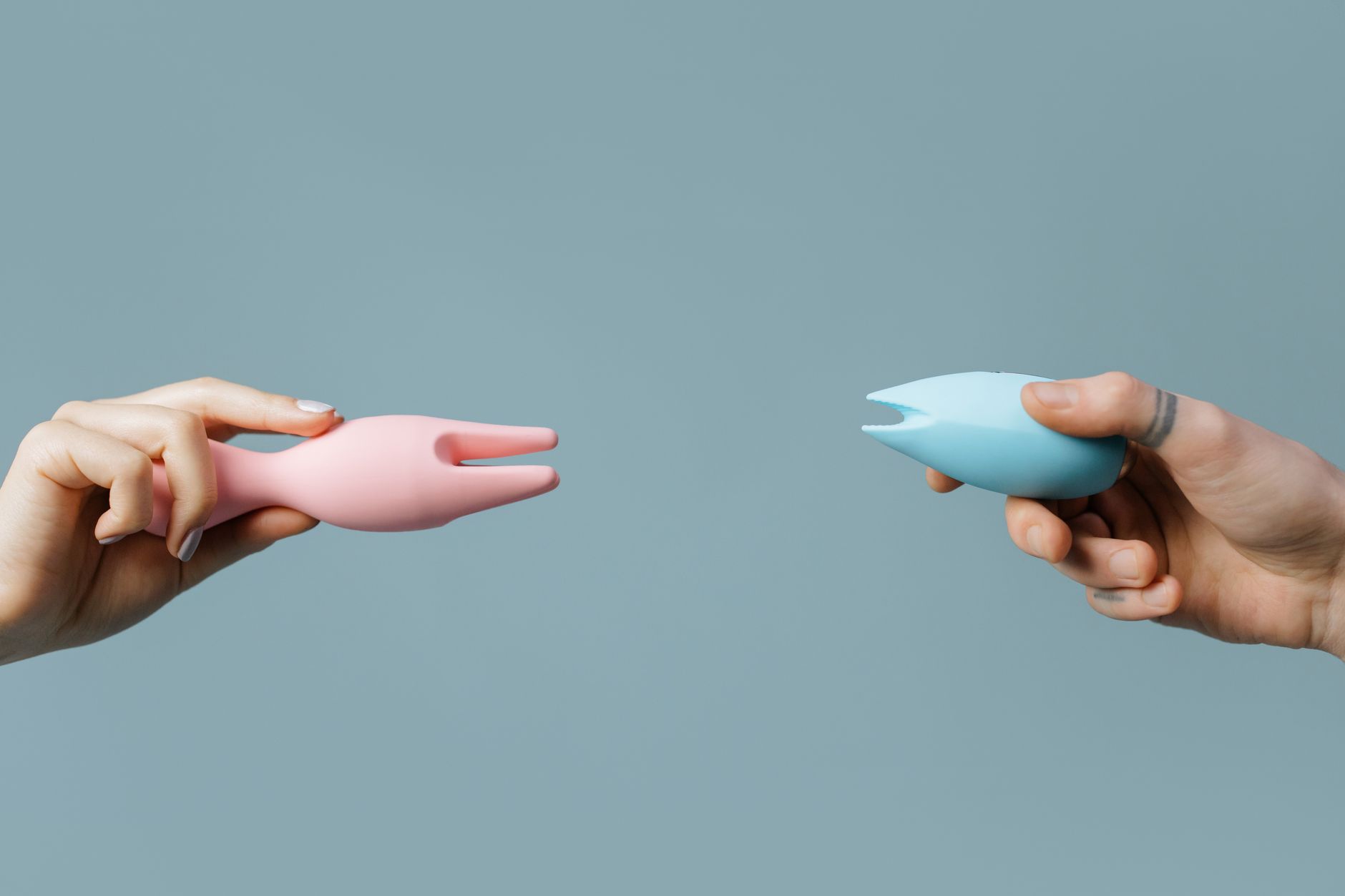
Photo by cottonbro studio on Pexels
Why lemon vibrators work specifically for parents
They're fast. A lemon clitoral vibrator gets to the point in ways that longer foreplay can't when you're operating on a 20-minute window before someone wakes up or needs you. That's not sad. That's strategic. You're not aiming for magazine-quality sex right now. You're aiming for enough pleasure that you both remember why you like each other.
They shift the pressure. When one partner can reliably reach orgasm without the other's direct participation, it dissolves the performance anxiety that kills desire. "Am I taking too long?" disappears. "Is this working?" becomes answerable. That relief alone often brings desire back for both of you.
They work solo or partnered. If you're exploring this alone first, lemon sexual toys give you permission to rediscover what your body wants without an audience. If you're using them together, they invite collaboration instead of performance. Your partner can hold the toy, adjust the intensity, pay attention. That's intimacy without the pressure to also have an orgasm, make it happen, or last a certain length of time.
How to actually rebuild this (step by step)
Start with yourself, alone. This might feel like the opposite of what you want to do when intimacy is distant. But it's not. It's the prerequisite. You need to reconnect with what pleasure feels like without the weight of someone else's needs, timing, or expectations. A lemon clitoral vibrator, 10 minutes, door locked. No goal. Just sensation. Do this 2-3 times before you involve your partner. You'll know something shifted when you stop feeling guilty about it.
Have the conversation separately from sex. Tell your partner what you're doing and why. Not during a sexual moment. Not as a prelude. Just a regular conversation. "I've been feeling disconnected from pleasure, so I'm going to spend some time exploring that alone. I want us to get some of that back together too." Most parents respond with relief that someone named the thing that's been silently wrecking them.
Protect a small window. Thirty minutes, once a week. That's all you need to start. Not "when the kids are asleep," because that's fluid and unreliable. An actual scheduled window. Sunday afternoons. Thursday mornings when they're at school. Saturday nights at 8:15 p.m. Treat it like a standing appointment you don't reschedule. You will feel resistance to this. That resistance is a sign it's necessary, not a sign it's wrong.
Skip the long foreplay setup. Have your lemon vibrator within arm's reach. Start however you want (clothes on, clothes off, kissing, not kissing). But get to the vibrator quickly. Use it on yourself while your partner is present. Let them watch. Let them hold it. The goal is sensation and presence, not a performance. You'll be surprised how fast this rewires your nervous system around pleasure being a normal, present thing.
When intensity sensitivity is part of the problem
Many parents, especially mothers, report that their sensitivity to touch changes after kids. You've been touched constantly for years. A lemon clitoral vibrator's suction mechanism is gentler than direct vibration, which makes it easier to use when you're overstimulated from a day of being a jungle gym. Start on the lowest setting and stay there. There's no prize for higher intensity. The whole point is that this feels good, not that it's intense.
When your partner isn't on board yet
Most resistance comes from one of three places. First: shame. He or she grew up believing vibrators meant something negative about the relationship or his or her performance. Talk about that directly. "This isn't about you. This is about me getting my nervous system back." Second: pressure. They think you're asking them to perform differently or more. You're not. Specifically say what you want: presence, not performance. Third: disconnection. If your partner feels rejected, a vibrator can feel like final proof. This is where individual therapy or a couples counselor becomes important. Lemon sexual toys can support reconnection, but they can't fix resentment. That needs conversation and sometimes professional help.
Building it back from here
You probably won't feel "in the mood" for several weeks. That's normal. Desire doesn't come before action in parenthood. It comes after. You do the thing, and then the neural pathways light up again. Somewhere around week three or four, you might notice yourself thinking about sex before the scheduled window. That's the system rebooting. That's the win.
The goal isn't to get back to how it was before kids. That version of desire lived in a body with different hormones, a different schedule, a different life. The goal is to build a version that fits your actual life now. Smaller, more intentional, and often deeper because it requires real choice instead of just happening.
People also ask
How often should we use lemon vibrators to rebuild intimacy after having kids?
Start with once a week for 20-30 minutes. That's enough to reset your nervous system without adding another obligation to your life. Once you both start feeling reconnected, frequency often increases naturally. But consistency matters more than frequency. A 20-minute window every week beats sporadic longer sessions that require perfect conditions.
Can using a lemon clitoral vibrator together actually help couples reconnect emotionally?
Yes, if you're using it as a tool for presence rather than performance. When one partner uses a vibrator while the other watches, helps, or simply remains present, it creates a shared experience that doesn't require both people to be in the same place physically or emotionally. That small shared moment of attention and pleasure often opens doors to bigger conversations about connection.
What if my partner feels threatened by lemon sexual toys?
Talk about what the threat actually is. Usually it's "I'm worried this means you don't want me" or "I'm worried I can't satisfy you." Both are about him or her, not about the toy. Reframe it: "I want us to have more pleasure, and this tool helps me get there. When I can get there, I want you in the room." Many partners feel relieved when they realize the vibrator isn't a replacement, it's a bridge back to each other.
Is it normal to feel guilty about using lemon vibrators when you have kids?
Completely. Parents, especially mothers, are culturally conditioned to believe that time on themselves is selfish. It's not. Pleasure is actually maintenance. You can't pour from an empty cup. The time you spend reconnecting with your body and your desire is time you're investing in your own mental health and your relationship. That's the opposite of selfish.
How do we know if this is a vibrator problem or a relationship problem?
Vibrators fix desire issues rooted in touch sensitivity, overstimulation, performance anxiety, or time pressure. They don't fix resentment, infidelity, unequal parenting load, or fundamental incompatibility. If you rebuild pleasure and the underlying issues remain, that's when you need a couples therapist. But many couples find that reconnecting physically opens the door to solving other problems together.
What if we're too tired to even try?
Then you're too tired for a lot of things, and this might be a sign that something bigger needs to shift. Too much parenting load on one person. Too much work hours. Too much isolation. A lemon clitoral vibrator is a tool for desire, not for motivation. If you don't have any energy left, the issue isn't the sex. It's the overall system. Talk to your partner about what actually needs to change so you both have 20 minutes a week to be human.
The real thing here
Parenthood doesn't kill desire. It redirects it. You pour everything into your kids because that's what survival feels like in those early years. But somewhere around year three or four, you can start to take a little back. Not in a way that abandons your kids or your responsibilities. Just in a way that says, "I matter too. We matter too."
Lemon vibrators are small. They're tools, not solutions. But they're specific, efficient tools that help couples remember how to be together in a way that feels good instead of obligatory. That's worth protecting some time for. And if you need help figuring out what that looks like in your actual life, we're here to talk.
Related reading
If this resonates, you might also find these helpful: How to Use Lemon Vibrators When Rebuilding Intimacy After Relationship Distance, How to Use Lemon Vibrators When Pleasure Feels Rushed or Performance Focused, and How to Use Lemon Vibrators When You Want Deeper Connection With Your Partner.