
Let's name the thing nobody names
You have never had an orgasm from penetration alone. Not from a partner, not from a toy, not from anything internal. And somewhere along the way, you decided that meant something was wrong with you.
Here's the truth: roughly 70 percent of people with vulvas never orgasm from penetration alone. That's not a glitch. That's anatomy. The clitoris has about 8,000 nerve endings concentrated in a space the size of a pea. The vaginal wall has far fewer. Mathematics wins.
What changes when you stop fighting this fact and start designing your pleasure around it instead.
Why external stimulation works (and internal doesn't, for you)
I'm going to keep this simple because the science is actually straightforward.
Orgasm requires sustained stimulation of the clitoris, the clitoral bulbs, or the surrounding erectile tissue. Internal penetration doesn't reliably deliver that stimulation because the angle is often wrong, the pressure is often too light, and the friction patterns don't match what your nervous system needs to reach the threshold.
External stimulation, on the other hand, puts you in direct control. You can target the exact spot. You can adjust pressure and rhythm in real time. You can do this while also managing any other sensations happening in your body.
This isn't a weakness. It's actually an efficiency. You're not waiting for a partner to guess. You're not contorting yourself into positions that don't feel good. You're using the tool that's designed to work.
Building your pleasure architecture
If you're using lemon vibrators for the first time with this intention, start here.
Map your preferences before you need to orgasm. Spend a solo session (or two, or five) exploring the clitoral vibrator on different patterns, intensities, and angles. Don't aim for orgasm. Just notice what feels good and where. Most people discover they have a sweet spot: maybe pattern 3 at medium intensity, applied directly to the clitoral glans. Maybe pattern 2 with more diffused pressure across the whole vulva. Maybe alternating between two patterns to prevent desensitization. Write it down or remember it. This is your baseline.
Learn your arousal curve. How long does it take to get turned on? Is it five minutes or thirty? Does your arousal stay steady once you're there, or does it fade if there's a pause? Do you need mental focus (fantasy, audio, reading) or is physical sensation enough? These answers matter because they shape everything else. If you need thirty minutes to get anywhere, a fifteen-minute encounter is already doomed.
Test with a partner (if you have one). Here's where things often break down. A partner doesn't know your map. They can't feel what you feel. And they might feel rejected or inadequate if you need external stimulation to finish. That's a relationship conversation, not a pleasure problem. See How to Use Lemon Vibrators When Your Partner Isn't Interested in Toys for exactly how to have it. But the short version: "I need clitoral stimulation to orgasm. That's not a reflection on you. It's how my body works. Can we explore ways to make this feel good for both of us?"
The practical setup that actually works
Let's talk logistics because logistics matter.
If you're coming from internal penetration (from a partner) and then adding external stimulation (from a toy), you need a few things to line up. First, you need a toy you can use while also being with someone inside you. A handheld clitoral vibrator like the Lemon Clitoral Vibrator works here. So does a wearable toy, though those are less precise. Second, you need lube because everything feels better with lube. Water-based works with silicone toys. Use it generously. Third, you need communication. "I'm going to use this to help me get there" is not a secret. It's a fact.
If you're going solo, you have more freedom. You can use your hands and a vibrator together. You can switch patterns mid-session without worrying about a partner's rhythm. You can take thirty seconds to breathe or adjust position. This is actually the ideal time to learn what you need because there's zero performance pressure.
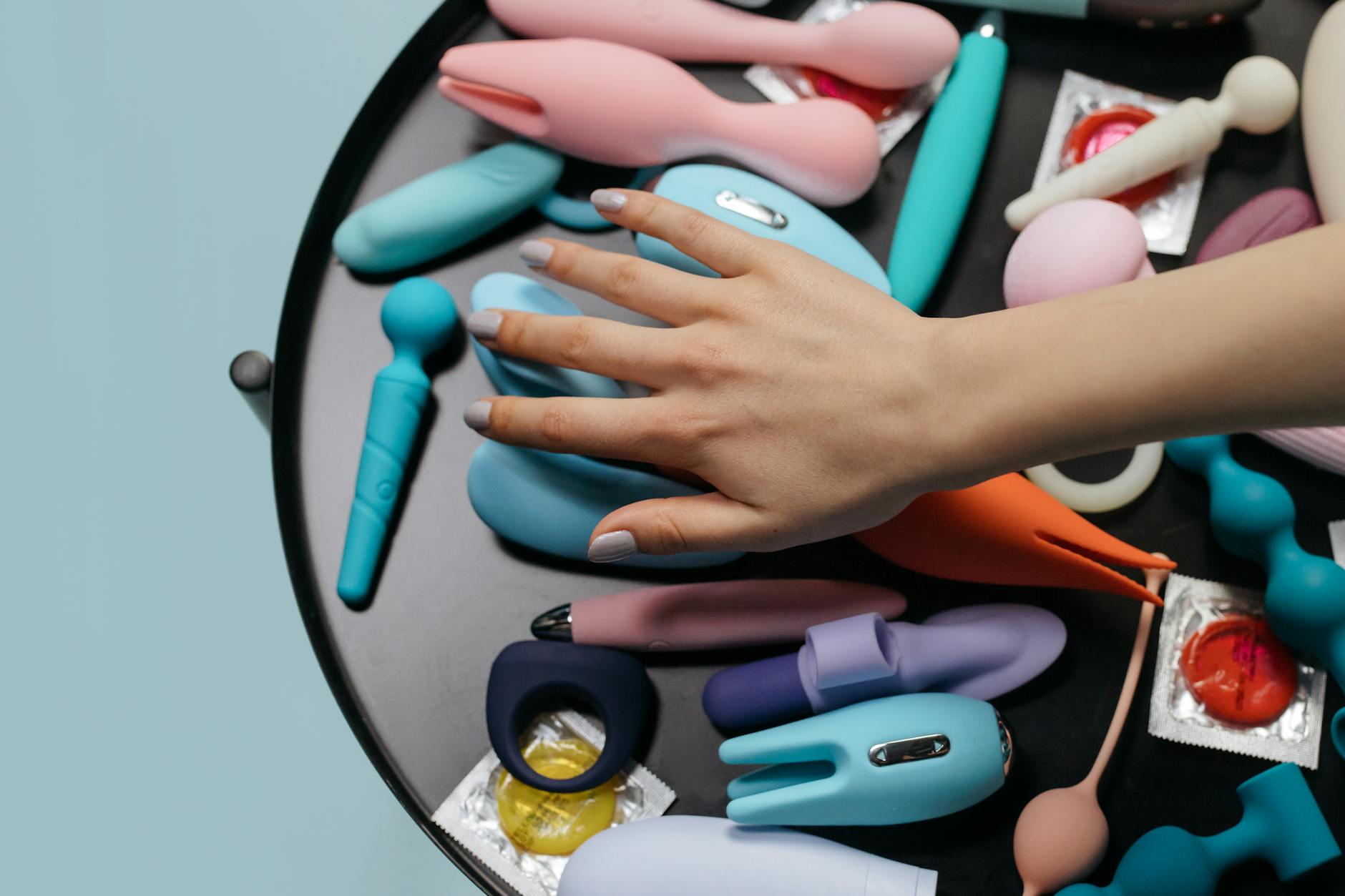
Photo by cottonbro studio on Pexels
Desensitization and how to avoid it
Here's the thing about vibrators: if you use the same intensity and pattern every single time, your nerve endings adapt. You need more stimulation to feel the same amount. Eventually, orgasm gets harder to reach, not easier.
To avoid this: rotate your patterns. If you usually use pattern 1, next time try pattern 3. Vary the intensity. Sometimes go harder, sometimes softer. Take breaks. A three-day break from vibrator use resets your sensitivity significantly. Some people alternate between vibrators and hands to keep things fresh.
Also, don't use vibration as a crutch for arousal. If you jump straight to the vibrator without any mental or physical warm-up, you're training your body to require maximum input. Instead, spend time on foreplay. Get your heart rate up. Let your blood flow to where it needs to go. Then introduce the vibrator when you're already partway there. This keeps your sensitivity threshold reasonable.
The mental piece (which is actually half the equation)
Here's what I see with clients over and over: someone is using a lemon clitoral vibrator correctly, their body is responding, and then they get in their head about whether it "counts."
Does needing a vibrator make the orgasm less real? Does it mean you're not actually attracted to your partner? Does it mean you have a dysfunction?
No. No. And no.
Orgasms from external stimulation are full-body experiences. Your nervous system activates the same way. Your heart rate climbs. Your breathing changes. Your pelvic floor contracts. Biochemically, there's no hierarchy. A vibrator-assisted orgasm is not a consolation prize.
The mental block usually comes from one of three places. First, you believed the cultural story that "real" orgasms come from penetration. Second, you feel like needing a tool means something is broken. Third, you worry your partner will feel unnecessary if you use a vibrator. Address the narrative first. Then rebuild from there. How to Use Lemon Vibrators When Pleasure Feels Rushed or Performance Focused digs into the performance angle if that's your sticking point.
Building stamina and reliable pleasure
Once you know what works, the goal becomes consistency. Can you orgasm reliably? Can you do it in a reasonable timeframe? Can you do it with a partner without it feeling like a production?
For solo practice, aim for two to three sessions a week where you're relaxed and focused. This isn't about chasing orgasm. It's about learning your body's rhythm. After a few weeks, most people notice their threshold drops and their reliability goes up.
For partnered scenarios, let your partner participate in a way that feels good. Maybe they use the vibrator while you focus on sensation. Maybe you use it while they're inside you. Maybe you use it while they do something else you like, like kissing your neck or talking to you. The goal is integrated pleasure, not parallel performances.
FAQ: External-only orgasms and lemon vibrators
Can I train myself to orgasm from penetration alone if I really want to?
Maybe. Some people can. But why spend energy on a goal that doesn't match your anatomy when you could optimize for what already works? You're not broken. You're not frigid. You're not incomplete without this skill. If partnered penetration matters to you for emotional reasons, work on it. If it doesn't, drop it.
Does using a vibrator regularly make orgasms harder to reach without one?
Desensitization is real, but it's manageable. Rotate your patterns and intensities. Take breaks. Use your hands sometimes. Most people find a rhythm where they can orgasm with or without a toy, they just have a strong preference.
Will my partner feel bad if I need a vibrator to finish?
Some people will. That's a compatibility question, not a body question. A secure partner understands that your orgasm isn't a reflection of their attractiveness or competence. It's just how your nervous system is wired. If your partner is making you feel shame about needing external stimulation, that's a relationship issue worth addressing directly.
How long does it usually take to orgasm with external stimulation?
Anywhere from five to thirty minutes depending on your arousal state, stress level, how long it's been since your last orgasm, whether you've eaten, and a hundred other variables. There's no "normal." Faster is not better. Consistent is what matters.
Can I use a clitoral vibrator during partnered sex if my partner is inside me?
Yes. Absolutely. Most partners actually prefer this because it means you're more likely to orgasm, which most of us find hot. Use water-based lube. Communicate about positioning so everything feels good. Start with lower intensities because the combined sensation of internal and external stimulation can be overwhelming at first.
If I can only orgasm with external stimulation, does that mean I have a low libido?
No. Orgasm capacity and desire are different. You can have a strong libido and still require specific types of stimulation to actually reach climax. They're not the same variable.
The permission you probably need
You don't need to be able to orgasm from penetration. You don't need to come without a tool. You don't need to reach climax in under ten minutes or look a certain way while it's happening.
What you need is to stop performing pleasure for an imaginary audience and start building it for yourself. That's where lemon clitoral vibrators come in. They're not a workaround for a broken body. They're a direct route to sensation that works. Use them. Optimize around them. Build reliable pleasure on a foundation that's actually solid.
If you want to talk through any of this in more depth, we're here. Reach out at /contact.