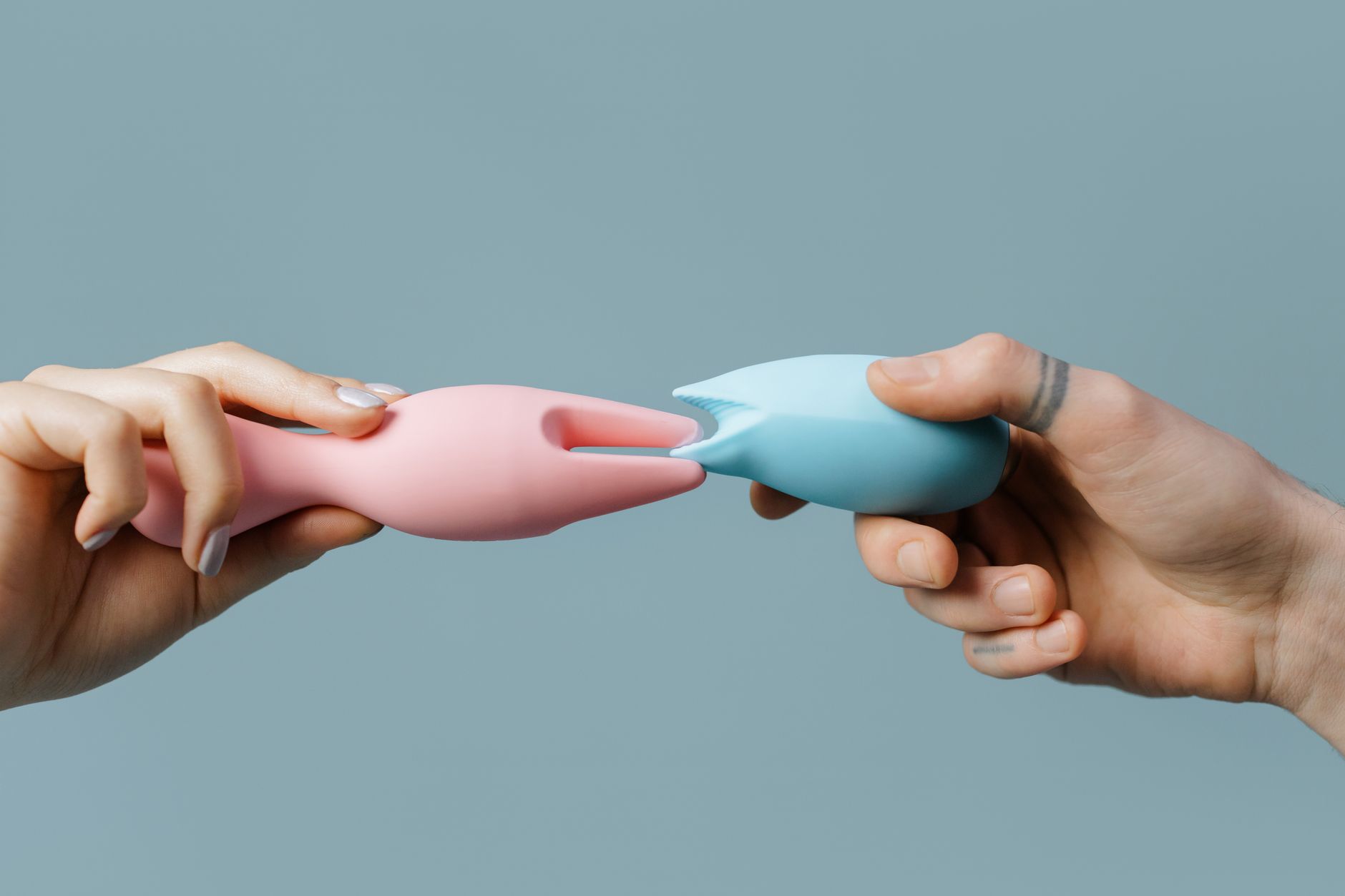
Let's talk about the uncomfortable truth nobody mentions
Your clitoris has about 8,000 nerve endings packed into a space the size of a pea. That's why it feels amazing. But it also means it can reach a saturation point where more stimulation doesn't feel better. It feels raw, numb, or actively painful. That's clitoral overstimulation, and if you're experiencing it, you're not alone and you're definitely not broken.
The problem is that most vibrators on the market are built for one goal: maximum intensity. Which works fine until it doesn't. Then you're stuck with either giving up on pleasure or white-knuckling through discomfort, neither of which is the answer.
Here's the thing. Clitoral overstimulation isn't about the vibrator. It's about how that vibration is delivered to your tissue. And once you understand the mechanics, you can actually fix it.
Why overstimulation happens in the first place
There are three main causes, and honestly, most people experience at least one.
Direct friction overload. Most vibrators are designed to press directly against the clitoris. After a while, that constant friction desensitizes the tissue. It's the same reason your hand goes numb if you grip something too tightly for too long. The nerve endings literally shut down to protect themselves.
The plateau trap. Once you've been using a vibrator for 15-20 minutes, your body adapts to the sensation. To keep building pleasure, you unconsciously increase pressure or speed. This accelerates the numbness, and within a few sessions, you're caught in a cycle where nothing feels like enough.
Microtrauma from texture mismatch. If you're using a vibrator with a rough surface or sharp edges against highly sensitive tissue, you're creating tiny tears. You might not feel them during arousal (the body is smart about numbing pain during sex), but they pile up. Then you wake up the next day and everything feels sore.
The result is the same regardless of the cause. Pleasure becomes uncomfortable. Your body develops an aversion to sensation. And you start avoiding the very thing that's supposed to feel good.
The clitoris isn't designed for constant pressure
Here's some anatomy that explains everything. The clitoris has two parts: the glans (the visible part you can feel) and the body (the internal wishbone-shaped structure). When you stimulate just the glans with direct pressure, you're taxing a tiny cluster of tissue. But when you use air-suction stimulation, you're actually engaging the entire clitoral body.
This matters because it distributes sensation across a larger surface area. Pressure is lower in any single spot, but pleasure is actually more intense because you're activating more nerve endings. It's the difference between poking your arm repeatedly in one spot versus gently pressing across your whole forearm. Same amount of nerve activation, completely different sensation.
Lemon vibrators, which use gentle air-suction technology, work with this anatomy instead of against it. They create a micro-massage effect that mimics how hands naturally work during partnered play. No aggressive vibration. No friction buildup. Just consistent, sustainable stimulation.
Recognizing overstimulation before it becomes a problem
These are the early warning signs. If you notice any of them, it's time to change approach.
Your clitoris feels sore the next day, even though you enjoyed yourself in the moment. You need progressively higher intensity or longer sessions to feel anything. Pleasure plateaus around the 10-15 minute mark instead of building. You feel pressure or achiness during stimulation, separate from the pleasure sensation. You need to take longer breaks between sessions to feel sensation again.
One of the most important things I coach couples through is recognizing the difference between good discomfort (the building ache of arousal) and bad discomfort (rawness or soreness). The first is normal. The second is your body saying enough.
How to rebuild sensation safely with lemon vibrators
The strategy is deceptively simple. You're going to reduce direct pressure, extend your timeline, and let your tissue recover.
Start with the lowest setting. This isn't a speed run. Set your Lemon vibrator to pattern 1 or 2. If you've been using high-intensity toys, this will feel impossibly gentle at first. That's the point. Your clitoris needs to relearn what comfortable stimulation feels like without the nervous system bracing for pain.
Extend your warm-up phase. Spend 10 minutes on gentle foreplay before you even touch your clitoris. This allows blood to flow to the area and prepares the tissue for sensation. Then start with your Lemon vibrator on the lowest setting, working around the hood and sides of the clitoris rather than directly on the glans. Indirect stimulation is underrated.
Build gradually over weeks, not days. If you're coming back from overstimulation, your tissue needs time to recover. I recommend a 5-7 day break if you've been experiencing soreness. Then restart with these lower-intensity sessions 2-3 times per week, giving yourself recovery days between. After two weeks, you can assess whether increasing to pattern 3 feels sustainable.
Pay attention to the position of the toy. With air-suction vibrators like Lemon's offerings, you have more control over exactly where stimulation lands. Experiment with positioning slightly off-center, over the hood, or on the sides. You'll likely find that some angles feel phenomenal while others feel too intense. That's information. Use it.
Prioritize lubrication, even if you're naturally wet. Using a water-based lubricant reduces friction and creates a better seal for air-suction stimulation. It also signals to your nervous system that this is different from the overstimulation pattern it's been experiencing. Psychologically, it's a reset button.
When overstimulation happens with a partner
If you're experiencing overstimulation during partnered sex, the mechanics are the same but the communication layer is crucial. Many people stay quiet about discomfort because they don't want to disrupt the mood or seem high-maintenance.
Here's what I tell couples. The mood isn't real pleasure if one person is gritting their teeth. Honesty about sensation makes everything better for both partners.
You might say something like, "I've been pushing through some discomfort during stimulation, and I want to try something different. Can we slow down and use a different approach?" That's not a criticism of your partner. It's an invitation to explore together.
Using a Lemon vibrator with a partner actually solves a lot of this because the toy becomes the subject of focus rather than your partner's hand. They can hold it, but you're controlling pressure through positioning. It gives you more agency while still feeling collaborative.
The psychological piece nobody talks about
After overstimulation, your nervous system can develop an aversion to the sensation that hurt. This is learned pain, and it's real. Your brain literally associates clitoral stimulation with discomfort, so when you try again, your body tenses in anticipation of pain.
Breaking this cycle requires patience and consistency. You're teaching your nervous system that gentle, sustained stimulation is safe. This usually takes 3-4 weeks of positive experiences before your body starts to relax into sensation again.
If you find yourself anxious about pleasure even with lower-intensity approaches, it's worth exploring that with a therapist. Sometimes overstimulation is physiological. Sometimes it's a symptom of something deeper happening emotionally or relationally. Both need addressing.
FAQ: Rebuilding pleasure after clitoral overstimulation
What's the difference between numbness from overstimulation and reduced sensitivity from hormones?
Hormonal changes usually develop slowly over weeks or months and affect your baseline sensation across your whole body. Overstimulation numbness happens suddenly or acutely and feels localized to your clitoris. With hormones, lower-intensity stimulation still feels something. With overstimulation, you might feel almost nothing. The treatments are different too. Hormone-related sensitivity usually needs 15-20 minutes of stimulation to build. Overstimulation usually needs fewer sessions per week and much lower intensity.
Can clitoral overstimulation cause permanent damage?
Actual permanent damage is rare. The tissue is resilient. But the nervous system can take weeks or months to reset if you've been chronically overstimulating. The good news is that with the right approach, sensation almost always comes back. I've worked with plenty of clients who thought they'd permanently lost the ability to feel pleasure, and they regained it completely.
Is it normal for air-suction vibrators to feel uncomfortable at first?
Absolutely. They work differently than friction-based vibrators, so your body needs an adjustment period. What feels uncomfortably gentle on day one usually feels perfect by day three. If it continues to feel wrong after a week, you might have underlying inflammation that needs recovery time before reintroducing any stimulation.
How do I know if I should switch vibrator styles or just use lower intensity?
Try lower intensity first. If you can go 20+ minutes on pattern 1 or 2 and feel consistently better (not worse) over two weeks, then you've probably just been overstimulating with too much power. If even the gentlest setting causes discomfort, you likely need to switch to a vibrator that distributes pressure differently. Air-suction technology, like what you'll find with lemon vibrators, is often the answer here because it engages different nerve pathways than direct vibration.
What if my partner insists on higher intensity even though it hurts me?
That's a bigger conversation than technique. A partner who continues doing something after you've said it causes discomfort isn't respecting your boundaries. That's worth addressing directly and possibly with a couples therapist. Your pleasure and comfort matter. Full stop.
Can overstimulation damage my ability to orgasm with a partner?
It can temporarily reduce your interest in partnered sex because you've learned to associate stimulation with discomfort. But it doesn't damage your capacity for orgasm itself. Once you rebuild your baseline sensitivity using gentler methods, partnered pleasure usually comes back quickly because a partner's touch is naturally more varied than a vibrator set to one speed.
Moving forward
Clitoral overstimulation is fixable. It's not a permanent condition. It's your body's way of saying the current approach isn't working. That's valuable information.
Start with lower intensity. Give yourself recovery time between sessions. Use water-based lubricant. Rebuild gradually. And if you're partnered, communicate clearly about what feels good versus what feels like too much.
Your pleasure matters, and it should never hurt to pursue it. If you're struggling to rebuild sensation or if you're experiencing ongoing pain during masturbation or sex, reach out to us. We're here to help you navigate this.