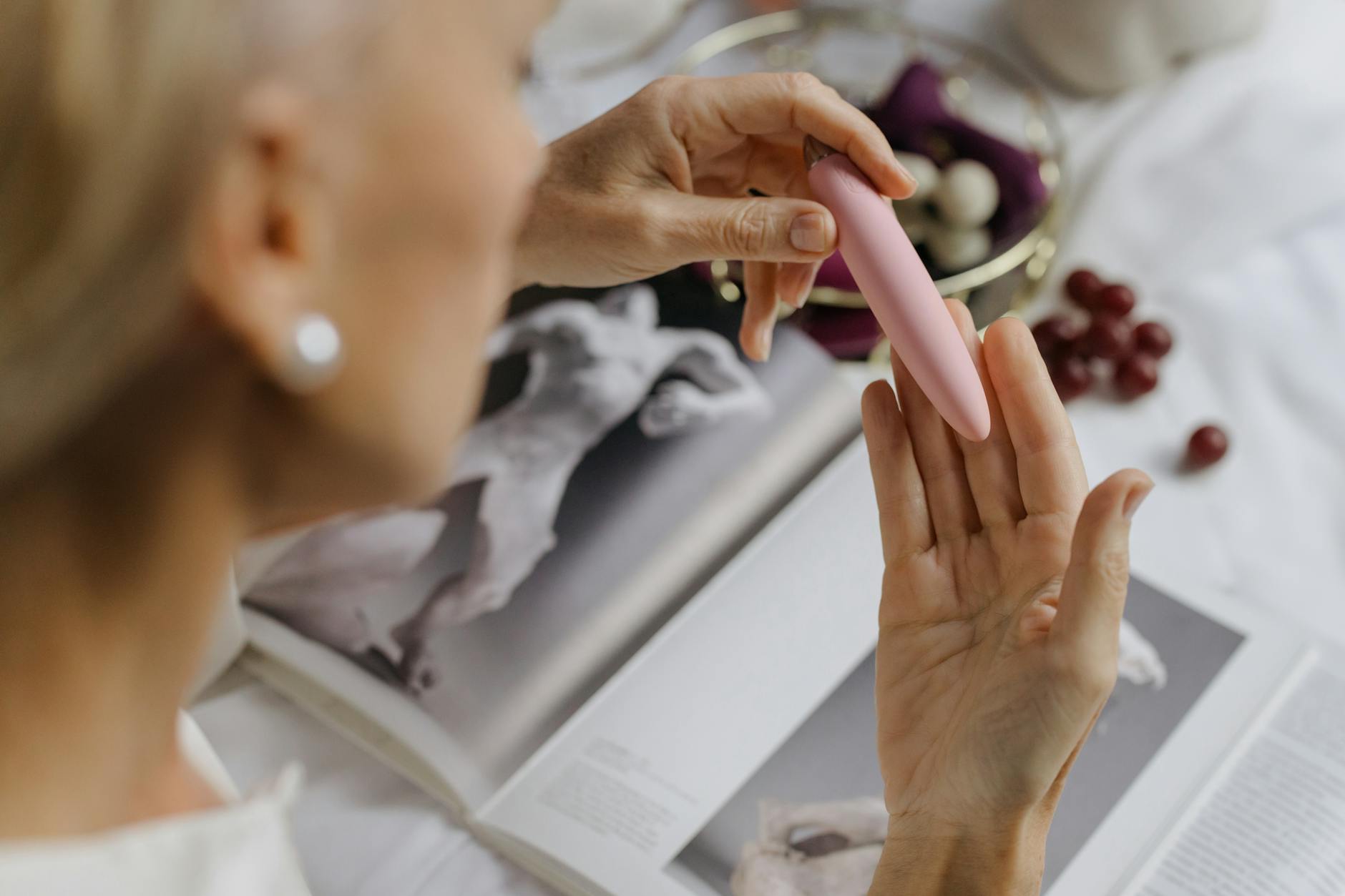
Here's the thing about bringing a toy into partnered sex
It's not rejection. It's not a replacement. It's not a referendum on what your partner is or isn't doing right. And yet that's often what it feels like when you're the one suggesting it, which is probably why you haven't brought it up yet. You're worried it'll land wrong.
That worry is valid. The good news: it doesn't have to land wrong. What changes everything is starting with honesty instead of a vibrator.
Why vulnerability matters more than the toy itself
When you introduce a Lemon clitoral vibrator or any lemon sexual toys to partnered pleasure, you're not really asking your partner to try something new. You're asking them to know something about you that matters. Maybe it's that you've been struggling to orgasm the way you used to. Maybe it's that you want to explore sensation in a different way. Maybe it's that you're curious and excited and you want them there when you discover it.
Your partner's reaction hinges less on the toy and more on whether they feel like they're being invited in or shut out. There's a massive difference between "I bought this because we need help" and "I found this and I want to experience it with you." One feels like a complaint. The other feels like an invitation.
The vulnerability isn't in the toy. It's in saying what you actually want.
Starting the conversation without the sales pitch
Don't lead with the vibrator. Lead with curiosity. Here's what I tell clients in my practice: you want a conversation, not a transaction.
Good openers:
"I've been thinking about trying something new together. Would you be open to exploring that?"
"I read about clitoral vibrators and got curious. I'd love to try one with you if you're interested."
"I want more of X sensation (or more variety, or a different way to build arousal). I found something I want to try. I'm nervous about bringing it up, but I also know I can only do this with you."
Notice what's happening: you're naming your desire clearly, you're being honest about the ask, and you're including them. You're not sneaking or explaining away or minimizing.
Bad openers:
"Don't take this the wrong way, but..."
"I know you might feel weird about this..."
"I'm not saying there's anything wrong with our sex life, I just..."
All of these lead with apology. All of them put your partner in defensive mode before the conversation even starts.
What to expect and how to respond
Your partner might say yes immediately. More likely they'll ask questions or need time to think. Both are fine. Pushing for an instant answer usually backfires. You're not asking them to buy in on the spot. You're asking them to stay curious.
If they seem uncomfortable, resist the urge to backpedal or reassure them that it's no big deal. It IS a big deal to you, and your job is to hold that without shrinking. Say something like: "I know it might feel unexpected. Take your time with it. I'm happy to answer questions or just let it sit for a bit."
If they ask why you want to try it, tell them the truth. Not a theory about what might work. Not an idea you read somewhere. Your actual reason. "Because I'm curious about it" is a complete sentence. "Because I want to see if it changes how I feel" is enough. "Because I trust you and I want to explore this together" is even better.
Lumen Intimacy's line of lemon vibrators is designed specifically for partnered exploration as well as solo use. They're intuitive enough that curiosity can lead the way.
The setup that makes it feel less clinical
When you've both said yes, the context matters. You're not performing a procedure. You're playing. That changes everything.
Set yourself up for success: lock the door, put your phones away, choose a time when you're not exhausted or rushed. Some people light a candle or play music. Some people just get into bed and laugh at the awkwardness of the first try. Both are fine. The point is you're creating space where experimentation feels normal, not like a special medical event.
Start with clothes on. Touch each other first. Kiss, hold, explore skin contact without the vibrator in the room yet. Your nervous system needs to remember what safety feels like with this person before you add a new element. This isn't wasted time. This is the foundation everything else rests on.
When you do introduce the vibrator, one of you holds it. Start with the lowest setting. You could hand it to your partner and show them where feels good. You could hold it yourself first and let them watch you enjoy it. You could explore together. There's no script here. The point is it's collaborative, not performed.
What actually happens when you use lemon clitoral vibrators together
Pleasure usually feels different with someone watching than it does alone. Sometimes that's amazing. Sometimes it's distracting. Sometimes it's both. You might feel more sensation. You might feel more self-conscious. You might laugh. You might find that the vibration combined with your partner's touch creates something you weren't expecting.
The first time is often awkward. That's not a failure. That's normal. Your nervous system is processing three things at once: the new sensation, the vulnerability of being seen in pleasure, and the slight uncertainty of whether this was the right call. Give yourself grace.
If it doesn't feel incredible immediately, that's okay. Sometimes pleasure builds over time, over repeated experience, over the deeper trust that comes from trying something together and surviving it intact. Keep experimenting. Pay attention to what feels good and what doesn't. Use that information.
Many people find that introducing lemon sexual toys into partnered play actually deepens intimacy not because of the toy but because they had to be honest first. You had to say what you wanted. They had to listen. You both had to be willing to feel a little awkward in service of something that mattered. That's relationship building.
When the conversation goes sideways
Sometimes your partner says no. Sometimes they get defensive. Sometimes they feel threatened or rejected or confused about what it means that you want this.
Here's the hard part: you can't fix that reaction by abandoning your desire. You can only address it by staying steady in what you've asked for while also hearing what they're scared of.
If they're worried it means something about them, get specific: "This isn't about what you lack. This is about what I'm curious about. I want you with me while I explore it."
If they're worried it means you're pulling away from partnered sex, reassure them with action. Prioritize physical time together. Be clear that the vibrator is addition, not replacement.
If they're resistant for religious or cultural reasons, that's worth taking seriously. You might decide to move forward anyway. You might decide to wait. You might decide to explore solo first and bring the conversation back around later. These are choices, not failures.
What you're learning through this process is how you and your partner navigate difference. That's valuable information. It might take multiple conversations. It might take time. That's still progress.
Building toward deeper exploration
Once you've used lemon vibrators or hello nancy clitoral vibrators together a few times, you might find yourselves getting curious about variations. Different patterns. Different intensities. Different positioning. Some people discover that trying something new together actually reignites desire they thought was dormant. Some people find that it creates a pattern of experimentation that extends beyond toys.
The trust you build through this first conversation makes every conversation that follows easier. You've proven to each other that you can ask for things that matter. You can sit with a little awkwardness. You can still be attracted to each other after being vulnerable. That's huge.
Many couples I work with find that introducing toys marks a shift in how they talk about desire altogether. They get better at naming what they want. They get more creative. They stop waiting for sex to happen to them and start building it together. The vibrator was just the catalyst.
People also ask
Will my partner feel threatened by me using a vibrator?
Not if you frame it as something you're doing with them, not instead of them. The threat usually comes from feeling excluded or from wondering if there's something wrong with their performance. Be explicit: you're excited about pleasure and you want them there. That almost always lands differently than shame or apology.
How long should I wait after having the conversation before actually using a vibrator together?
There's no timer. Some couples want to try the same night. Others need a week or two to process. If your partner needs time, respect that. If you need time before trying, say so. Rushing either person usually creates friction. Pacing yourselves means you're both genuinely ready when it actually happens.
What if my partner wants to try it but seems uncomfortable when we actually start?
Stop and check in. Say something like, "This feels different than we thought it might. How are you doing?" You might need to slow down, use a lower setting, change positions, or just take a break. The conversation doesn't end after you say yes. It continues in real time. Staying connected is more important than completing the act.
Can we use lemon vibrators if my partner has never used one before?
Absolutely. In fact, many people find that experiencing clitoral vibrators for the first time with a trusted partner makes the experience feel safer and more connected than trying it solo. Take your time with it. Low setting first. Let your partner see what the sensation is like before it's their turn to feel it. Curiosity is contagious.
What if we try it and decide we don't like it?
Then you don't do it again. You've now gathered real information about what works for you as a couple. That's useful. You're not obligated to keep trying something just because you brought it up. You're also not obligated to abandon the idea forever. You might feel different about it in six months or a year. For now, you file it under "we tried that, it wasn't our thing" and you keep exploring in directions that do feel good.
How do I know if my partner is actually on board or just going along with it?
Ask directly. "Are you genuinely interested in trying this, or are you just trying to make me happy?" People usually tell you the truth if you ask like you actually want to hear it. If they're just accommodating, you now know that. You get to decide if that changes your plan. Sometimes the hottest sex happens when both people are enthusiastic. Sometimes it happens when one person trusts the other enough to explore something that wasn't their idea. Both are valid.
The vibrator is just a tool. What matters is that you got honest about what you wanted and that you invited your partner in. That's the real intimacy. Everything else builds from there.