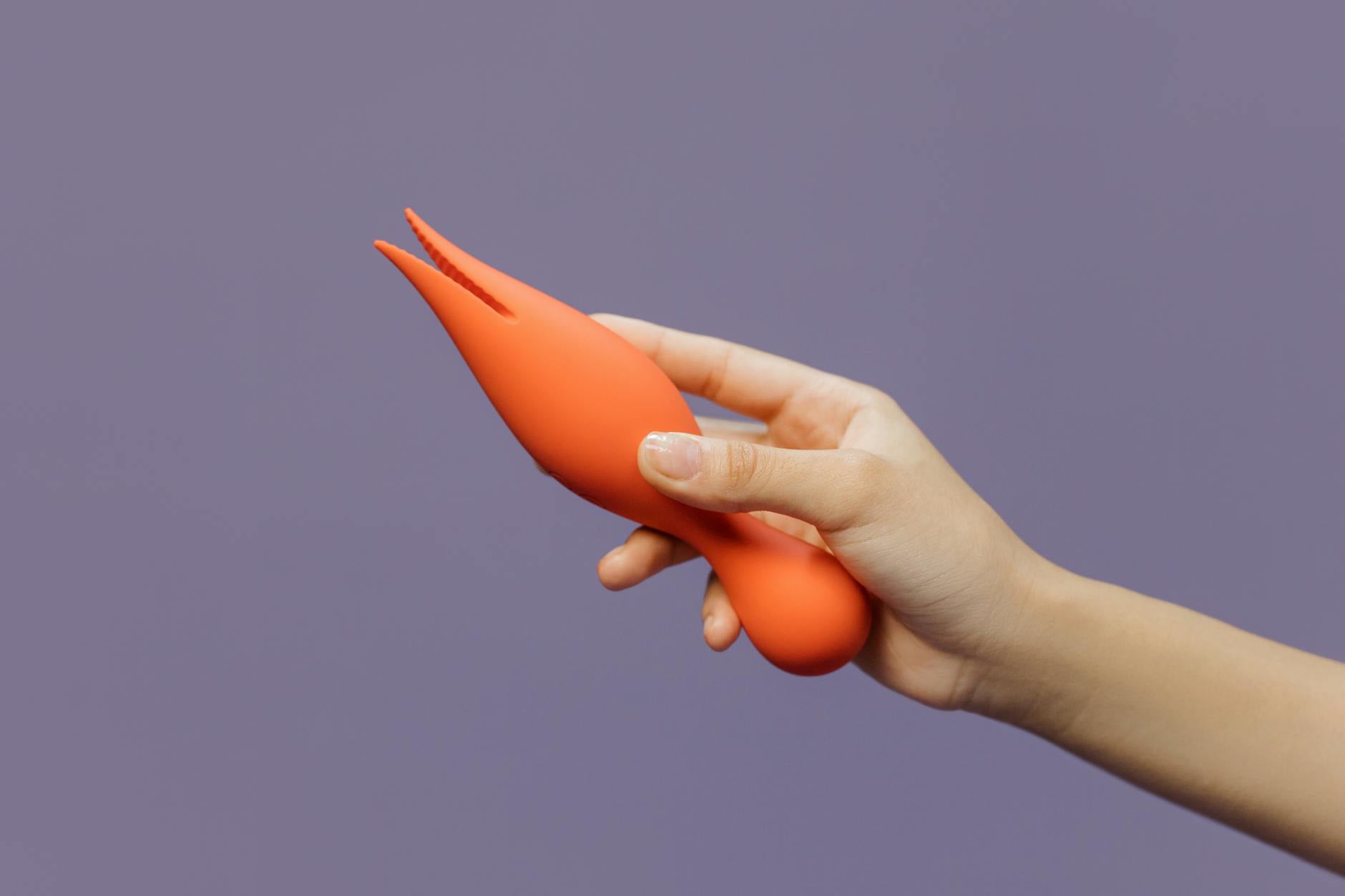
Here's what nobody tells you about symmetry
Your clitoris is not a single button. It's a complex structure with a visible glans, a hidden shaft, and two internal branches (the crura) that extend deep into your pelvis. Those branches don't develop symmetrically. One side is almost always more sensitive, more enervated, or more responsive than the other. This is completely normal. You are not broken.
What gets weird is when you discover this asymmetry for the first time and spend years compensating for it. You angle your body. You avoid certain positions. You assume something is wrong with you during sex. Then you finally get a lemon clitoral vibrator and realize the problem was never you.it was just that you needed the right tool and the right angle.
Why one side responds faster
Think about nerve density like a map. Some areas of your body have more nerve endings clustered together. On the clitoris, this distribution is almost never even. One side of your clitoris may have significantly higher nerve density than the other, which means it processes stimulation faster and builds arousal quicker. This isn't a defect. It's just anatomy.
There's also the pathway question. The pudendal nerve supplies most of the external vulva, but nerve damage or compression during childbirth, from cycling, or from trauma can affect one side more than the other. Age and hormonal changes affect tissue thickness unevenly too. Even scar tissue from an episiotomy or prior injury can make one side feel numb or defensive compared to the other.
The third factor is psychological. If you've spent years tensing the less-sensitive side because you're waiting for it to "catch up" to the other, you've trained that side to stay tense. Tension blocks sensation. A lemon vibrator can interrupt that pattern, but only if you know how to use it.
Mapping before you play
Spend one solo session just learning where you are right now. Use your fingers first. No pressure to orgasm. No goal at all.
Start at a low intensity on one side of your clitoris (usually the right or left outer edge). Notice the moment you feel the vibration register. Is it immediate? Does it take a few seconds? Does it feel sharp or dull? Now move to the opposite side and repeat. Most people find one side responds in about 2-3 seconds and the other takes 5-10. That information is gold.
With the lemon clitoral vibrator, do the same experiment on a low suction setting. The lem works differently than traditional vibration. It doesn't buzz. It creates rhythmic suction and release, which stimulates a larger area of tissue at once. You might find that suction smooths out some of the asymmetry because the wider stimulation pattern pulls in both sides more evenly.
Note everything: which side wakes up first, which side handles more intensity, which pattern feels good on which side. You're not trying to fix anything yet. You're just gathering data.
The technique that works
Once you know your map, the strategy is simple. Start on your more sensitive side. Let it build fully. This usually takes 3-5 minutes on a lower suction setting. Don't rush. The goal is to get that side genuinely turned on, not just stimulated.
Then, switch to the less sensitive side. Here's the key: don't use the same setting you used on the sensitive side. Go one or two levels higher in intensity. This compensates for the lower nerve density. You're not trying to match the sensation on the other side. You're trying to send the same strength of signal through a less-responsive pathway.
Keep your attention on the less sensitive side for 2-3 minutes. Don't alternate back and forth frantically. That trains your nervous system to chase the easier feeling. Instead, commit to building sensation on the harder side. Your brain will catch up.
Once both sides feel awake and engaged, you can play with both at once. Some people like to alternate in a rhythm. Others like to focus on one at a time but more fluidly. A lemon suction vibrator is forgiving for this because it doesn't require precise positioning the way a traditional vibrator does. The suction pulls you in slightly, so small shifts don't ruin the sensation.
The partner conversation
If you're working with a partner and they've been stimulating you in ways that favor your sensitive side, you need to tell them what you've learned. This sounds obvious, but many people skip it because they're embarrassed or because the asymmetry feels too intimate to explain.
You don't need to pathologize it. Just say something like: "I realized one side is way more sensitive than the other. I need a bit more attention and pressure on this side. It's not you. It's just my body." Most partners are relieved to have an answer and a concrete way to help.
If you're using a lemon clitoral vibrator together, start with the technique you've practiced solo. Let them watch what works. Let them hold the vibrator sometimes and apply the patterns you've discovered. This removes the guesswork and makes sex feel collaborative instead of like they're searching for the magic button.
Common obstacles and how to move past them
One side goes numb or stops responding mid-session. This is usually because you've been working it too hard. Back off the intensity, take a 30-second break, and come back gentler. Your nervous system has a saturation point. Cross it, and sensation actually decreases temporarily.
One side always feels slightly painful or defensive. This might be scar tissue, inflammation, or just protective tension from years of avoidance. A lower suction setting works better than pressure here. Consistency matters more than intensity. Your body will gradually relax the protective response if you approach it patiently over several weeks.
You can't orgasm focusing on the less-sensitive side alone. Of course you can't. That's not how your nervous system works. You're asking a lower-density nerve pathway to do the same job as a higher-density one. Instead, build arousal on the sensitive side, let that momentum carry to the other side, and then bring the lemon vibrator back to the sensitive side for the final push. The orgasm doesn't need to be centered on one side. It can be a whole-system experience.
Why a lemon vibrator handles this better than most
Traditional vibrators work through direct pressure and buzz. They require precise positioning and constant adjustment. If your sensitive side is slightly forward or your less-sensitive side is recessed, you're constantly hunting for the right angle. That friction (pun intended) makes asymmetry worse because you end up favoring one side even more.
The lemon clitoral vibrator uses suction and air-pulse technology. This creates a larger field of stimulation. Instead of trying to hit a tiny target with a buzzing tip, you're creating a rhythm across the entire vulva. That broader approach automatically reduces the sensation gap between your two sides. You get more even stimulation with less micro-adjusting.
Plus, the lemon vibrator has multiple intensity and pattern levels. You can dial in different settings for different sides without switching toys. That continuity matters psychologically too. You're not treating one side as a problem to be solved differently. You're just adjusting the volume.
When to seek outside help
If the asymmetry is paired with sharp pain, numbness that persists for hours, or a complete absence of sensation on one side, talk to a gynecologist or pelvic floor physical therapist. That's not typical asymmetry. That's a sign something might need clinical attention.
If you've been working with the lemon clitoral vibrator for four weeks and there's zero improvement or everything feels more difficult, a pelvic floor PT can do targeted release work on the tense side. Sometimes what feels like low sensitivity is actually protective tension. A few sessions of release can transform everything.
Otherwise, this is something you learn to work with and even enjoy. Asymmetry means you have multiple pleasure pathways. That's actually more flexibility, not less. Most people with totally even sensitivity across both sides have no idea how to use that variation. You already do.
People also ask
Is uneven clitoral sensitivity permanent?
No. It can change with age, hormones, stress levels, and pelvic floor tension. If you've spent years avoiding stimulation on your less-sensitive side because it felt frustrating, that side has learned to be quiet. Consistent, gentle reintroduction can wake it up again over weeks or months. A lemon vibrator accelerates this because the suction technology doesn't require the hyper-focus that traditional vibration does.
Can I train my less-sensitive side to match the other one?
Not exactly, but you can increase its responsiveness. Nerve density doesn't change, but nervous system sensitivity does. Repeated stimulation, lower-stress positioning, and longer warm-up times all help the less-sensitive side learn to fire faster. It may never feel identical to the other side, and that's fine. The goal is usable pleasure, not perfect symmetry.
Why do clitoral suction vibrators work better for asymmetry?
Because suction creates a larger field of stimulation than direct vibration. Instead of trying to position a buzzing tip on a specific spot, you're creating a gentle rhythm across the whole area. This distributes sensation more evenly, so the gap between a sensitive and less-sensitive side doesn't matter as much. The lemon clitoral vibrator is specifically designed this way.
Should I tell my partner about my uneven sensitivity?
Yes, but only if it's affecting your pleasure or their confidence. If you're already satisfied and they're already satisfied, there's no problem to solve. If you find yourself avoiding positions or getting frustrated during sex, talking about it solves half the problem. Most partners actually feel relieved. They're usually worried they're doing something wrong anyway.
Can numbness on one side mean nerve damage?
Maybe. Nerve compression from trauma, childbirth, or even chronic tension can cause localized numbness. So can hormonal changes, certain medications, and pelvic floor dysfunction. If the numbness appeared suddenly or is paired with pain, that's worth a conversation with a gynecologist. If it's been there as long as you can remember, it's probably just your anatomy.
How long does it take to notice improvement with a lemon clitoral vibrator?
Most people notice the technique working within 2-3 sessions. The less-sensitive side feels more awake. Orgasms feel fuller. If you're dealing with protective tension or scar tissue, meaningful change takes 4-8 weeks of consistent practice. Patience matters here. Your nervous system is learning something new.